Ceppo Breccia Rosa Marble: The Ideal Stone for Contemporary Luxury Applications

One of the most challenging parts of designing a space is selecting the right material. That decision defines not just the surface, but the entire character of the interior.
Among materials that consistently hold relevance, Ceppo Breccia Rosa Marble stands out. It remains in demand and continues to evolve through new design applications, where designers use it to bring clarity and structure into a space.
Its versatility across walls, flooring, and furniture makes it highly adaptable to modern interiors. It aligns with current design directions while maintaining a lasting presence.
This is a material that does not follow design. It defines it.


What is Ceppo Breccia Rosa Marble?
Ceppo Breccia Rosa Marble is a breccia stone defined by its fragment-led composition, where angular stone pieces are naturally bonded to form a single, cohesive surface. Its identity comes from this structure, not from veining, giving it a distinctly architectural character.
The surface is composed of large, visible aggregates set within a finer matrix, creating a layered and non-linear visual effect. This composition gives the material depth and movement, with each slab reading as a unique arrangement rather than a repeating pattern.
The “Rosa” variation introduces a warm rosé-toned base, supported by soft neutral undertones. This balance of color and structure creates a surface that is visually rich yet controlled, making it suitable for applications where material presence defines the space.
Origin and Heritage
Ceppo Breccia Rosa is associated with the Lombardy region in northern Italy, where Ceppo-style stones have been used extensively in architecture. The term Ceppo comes from Ceppo di Gré, a historic material quarried near Lake Iseo and widely used in traditional construction.
In Milan, these stones became a defining element in façades, pavements, and public structures. They were selected for their texture, strength, and ability to create surfaces with clear visual identity. This reflects a broader Italian approach to materials, where natural variation is respected and stone is used as both structure and design.


Visual Identity: Color, Fragments, and Movement
Overall Character
The surface reads as a composition rather than a flat plane. Each slab carries its own arrangement, which gives the material a curated and intentional appearance.
Color Palette
The base sits within a dusty pink or rosé tone, supported by beige, soft grey, and white fragments. The warmth remains controlled, so it adds depth without becoming dominant.
Fragment Composition
The structure is defined by irregular stone pieces instead of linear veining. Larger aggregates sit alongside finer details, which gives the surface a layered effect with no visible repetition and clear depth.
Visual Movement
The pattern has no fixed direction, so the eye moves naturally across the surface. It introduces energy into the space and responds strongly to light and scale without visual clutter.


Why It Stands Out: From Surface to Statement
Ceppo Breccia Rosa Marble stands out through its composition. The fragmented structure creates depth and variation, giving the surface a strong architectural reading.
The distribution of aggregates draws attention without forcing it. This positions the material as a primary element across walls, flooring, and furniture, where it defines the space instead of supporting it.
Its rosé base, combined with controlled variation, delivers presence without excess. The result is a material that feels deliberate, balanced, and visually grounded within the interior.
Core Applications in Contemporary Luxury Design
Ceppo Breccia Rosa Marble thrives in spaces where design is meant to be experienced, not just seen. Its bold composition allows it to define space.


Statement Surfaces
Statement surfaces establish identity, and this material takes full control of that role. On feature walls, lobbies, and reception areas, Ceppo Breccia Rosa Marble becomes the visual core. The fragment composition reads as a continuous architectural surface, not decoration.
In contemporary projects, designers position this material at key visual points such as entry walls, double-height spaces, and reception backdrops. It sets the narrative immediately and defines how the space is understood from the first glance.


Flooring with Character
On the floor, the material drives movement and spatial flow. Ceppo Breccia Rosa Marble spreads as a continuous composition, guiding the eye across the space. The fragmented structure creates depth and turns flooring into a defining layer of the design.
Designers use it to unify open layouts while maintaining visual variation. It connects living, dining, and transitional zones, allowing the space to feel cohesive without becoming flat or repetitive.


Kitchen Countertops
In kitchens, the material takes over the visual field. Countertops and islands become dominant elements, with the full composition expressed across horizontal surfaces. When extended into backsplashes, waterfall edges, and full-height applications, it creates a cohesive material language.
Designers approach kitchens as architectural spaces where one material defines the entire composition. This stone is used across multiple surfaces to create continuity and remove visual fragmentation.


Sculptural Furniture Pieces
In furniture, the material becomes the centerpiece. Dining tables, coffee tables, and consoles carry full visual weight, with the composition fully visible and intentional. The form remains minimal so the material leads.
Designers introduce single, strong marble pieces to anchor a room instead of layering multiple focal points. The material holds attention on its own and defines the surrounding space.


Bathrooms, Bathtub and Vanity Installations
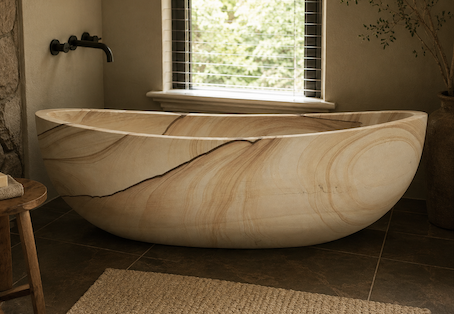
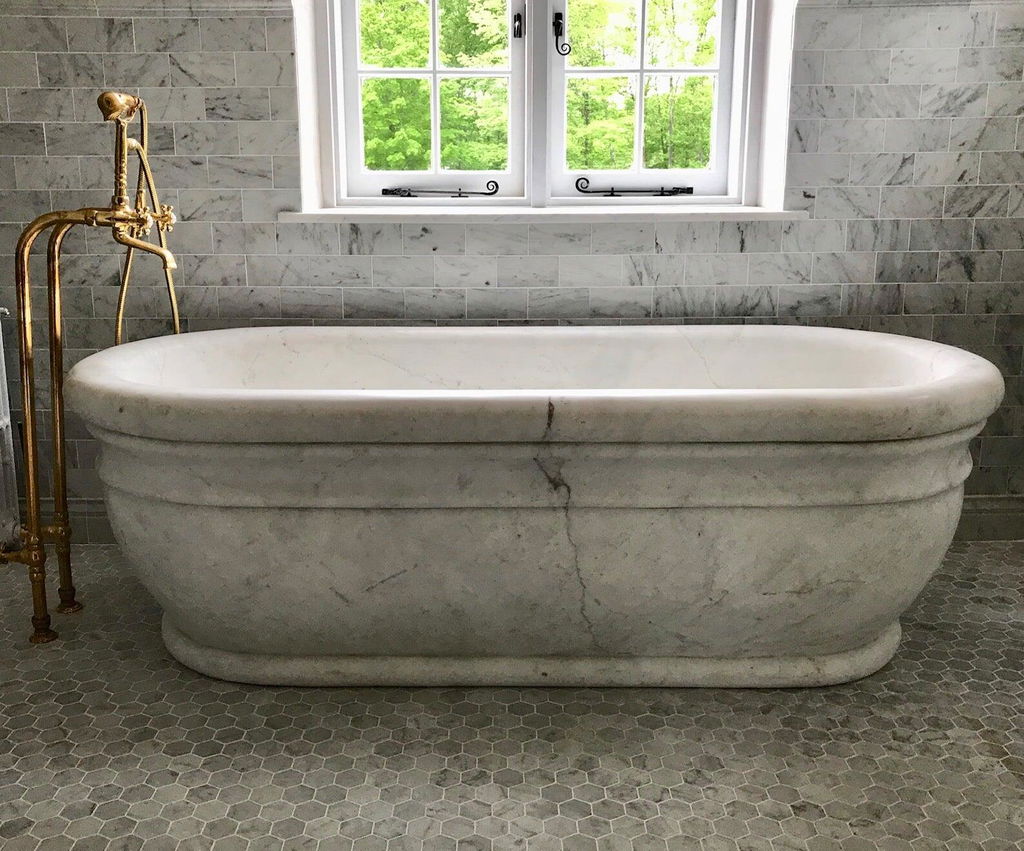
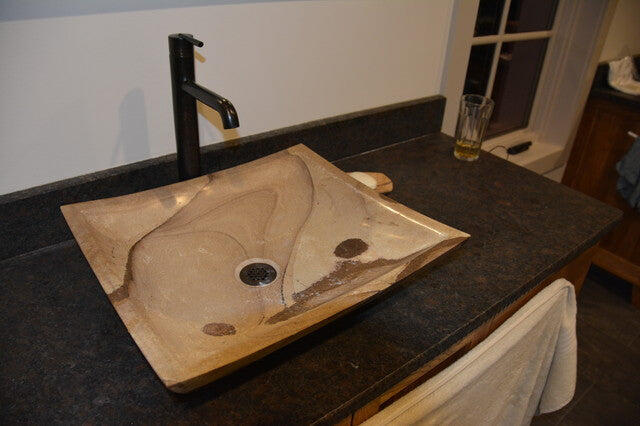
In bathrooms, the material defines both surface and form. Vanity tops carry depth and density, while sinks and bathtubs become sculptural elements. Bathtubs stand independently, where the full composition is experienced clearly.
Designers build bathroom spaces around the material, using it for monolithic vanities, carved tubs, and continuous wall applications. The result is a space that feels structured, immersive, and complete.


Accent Applications
In accent use, the material becomes precise and intentional. Niches, panels, and inlays introduce it in controlled areas where every fragment remains visible and defined.
Designers place it strategically to create sharp points of interest. Even in smaller applications, the material holds presence and strengthens the overall composition.
Design Strategy: How to Use a Bold Stone Correctly
Material Presence and Control
Ceppo Breccia Rosa Marble is a material that demands clarity in design. Its strength lies in how it is placed and how much space is given for it to be read. When used with restraint, it defines the interior. When overused, it loses impact and begins to compete with the space itself.
Placement and Application
The most effective approach is to build the design around a single, strong application. A feature wall, a floor plane, or a key furniture piece allows the composition to be experienced fully. Surrounding elements should remain controlled, with neutral surfaces and minimal visual interruption, so the material holds its position within the space.
Common Mistakes to Avoid
Overuse across multiple surfaces or pairing it with heavily patterned materials disrupts this balance. Excessive textures and competing stones reduce clarity and create visual noise. In smaller spaces, continuous coverage can make the interior feel dense rather than defined.
Material Pairing and Balance
To maintain balance, supporting materials should remain understated. Soft plaster walls, warm wood tones, and restrained metal accents provide contrast without distraction. Textiles such as linen or boucle introduce softness, ensuring the overall composition remains grounded and cohesive.


Ideal Interior Design Styles it Goes Best With:
This stone is best suited to design approaches where material presence defines the space, including:
- Contemporary Luxury
- Minimalist Architectural
- Boutique Hospitality
- Modern Classic
- Curated Spaces
- High-End Residential
- Gallery-Inspired Interiors
- Transitional Contemporary
- Urban Luxury
If the design direction follows Contemporary Luxury, the surface should be treated as the focal point, supported by restrained elements so the composition remains clear. In Minimalist Architectural spaces, it works best when introduced in a controlled manner, where the material adds depth without interrupting the simplicity of the layout. For Boutique Hospitality projects, placement in high-visibility areas ensures a strong first impression and a clear material identity.
In Modern Classic interiors, it integrates well within structured layouts, where it introduces texture without disturbing balance. Within Curated Spaces, it should be limited to specific applications so the overall composition remains intentional. In High-End Residential settings, it is most effective in defining key areas such as living or dining zones, where material presence shapes the environment.
For Gallery-Inspired Interiors, placement should support visual elements without competing with them. In Urban Luxury spaces, it performs well in compact layouts where a strong material statement is required without adding visual weight. Within Transitional Contemporary designs, it works as a unifying element, bringing together classic and modern components into a cohesive whole.


Performance, Durability and Maintenance
Ceppo Breccia Rosa Marble delivers consistent performance across both vertical and horizontal applications, including flooring, walls, and furniture. Its dense composition provides durability suitable for high-traffic and daily-use environments without compromising surface integrity.
Maintenance requires regular sealing to protect against stains and moisture, especially in kitchens and bathrooms. Polished finishes enhance depth and fragment clarity, while honed surfaces offer a softer, matte appearance. Routine cleaning with mild, non-acidic solutions preserves the finish and ensures long-term visual stability.
Cost and Market Position
Ceppo Breccia Rosa Marble sits in the premium segment, influenced by its unique composition and sourcing.
Its pricing varies based on several factors. The consistency and balance of fragments play a key role, as more refined compositions are considered more valuable. Color uniformity across the slab also affects selection, especially when the rosé tone appears evenly expressed.
Larger slabs typically hold higher value, as they allow for more seamless applications with fewer joints. The choice of finish, whether polished, honed, or custom, further impacts the final cost.
It is positioned not just as a material, but as a design-led investment with long-term visual value.


Exclusivity and Natural Variation
What truly defines Ceppo Breccia Rosa Marble is its natural individuality. No two slabs are ever the same, and that difference comes from how the fragments are formed and distributed. Some slabs carry larger, more pronounced aggregates, while others appear finer and more detailed, each one reading slightly differently.
The color remains within a rosé palette, with subtle shifts from warmer pinks to softer beige undertones adding depth without disrupting overall harmony.
This level of variation ensures that every application feels distinct and considered rather than repeated.
In high-end design, this level of uniqueness matters. It turns the material into more than a surface and positions it as a defining element within the space.
Conclusion: Designing with Confidence and Character
Ceppo Breccia Rosa Marble is a material defined by structure, composition, and clarity. Its fragmented surface, warm tones, and controlled variation give it a strong and recognizable presence in contemporary interiors.
Used with intention, it shapes the space, establishes hierarchy, and brings a sense of order to the design. It moves beyond decoration and becomes part of the architectural language.
For projects that require material-driven design, it offers a clear direction. The result is an interior that feels considered, resolved, and built around a strong material foundation.
FAQs
1. Is Ceppo Breccia Rosa Marble suitable for flooring?
Yes. This material performs exceptionally well for flooring, particularly in large-format slabs that allow its fragmented composition to flow naturally. With correct installation and sealing, it delivers both durability and long-term aesthetic appeal, making it ideal for residential and commercial projects alike.
2. Is it too bold for small spaces?
While its expressive pattern can feel strong in compact areas, strategic applications, like accent walls, niches, or single surfaces, enhance smaller spaces without overwhelming them. Thoughtful placement ensures the stone adds character while maintaining a sense of openness.
3. How do you balance breccia marble in interiors?
Balance comes from pairing it with neutral tones, understated textures, and minimal patterns. Soft, directional lighting highlights the fragments’ depth, letting the stone serve as the focal point while surrounding elements remain subtle and supportive.
4. Is it durable for daily use?
Yes. With proper sealing and routine care, the surface withstands daily wear, making it suitable for high-traffic areas such as floors, countertops, and commercial spaces. Its dense composition ensures longevity without compromising beauty.
5. What colors go best with it?
Complementary tones include beige, warm woods, soft greys, and metallic accents like brass or gold. These pairings highlight the stone’s natural warmth and dynamic patterning while maintaining an elegant, cohesive interior palette.
6. Can it be customized for different applications?
Absolutely. The stone can be cut, finished, and adapted for walls, furniture, bespoke furniture, vanity tops, or other design features. Customization ensures every project benefits from its expressive character while fitting the intended space perfectly.
MarbleBee Perspective
At MarbleBee, materials like Ceppo Breccia Rosa are approached as design elements, not just surfaces. Each slab carries its own composition, and the focus remains on placing it correctly within the space so it reads with clarity and intent.
Work is done in close coordination with designers and architects, adapting the material into precise sizes, finishes, and applications based on project requirements. Every stage, from selection to final execution, is handled with attention to detail to ensure the material performs as intended within the design.
With a strong in-house collection and the ability to customize across formats, each project is treated individually. The approach remains consistent: controlled execution, material understanding, and outcomes that align with the overall design language.