Guide to Luxury Marble Pedestal Sink Plumbing and Rough-In Specifications
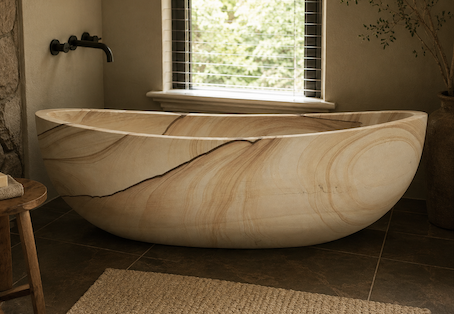
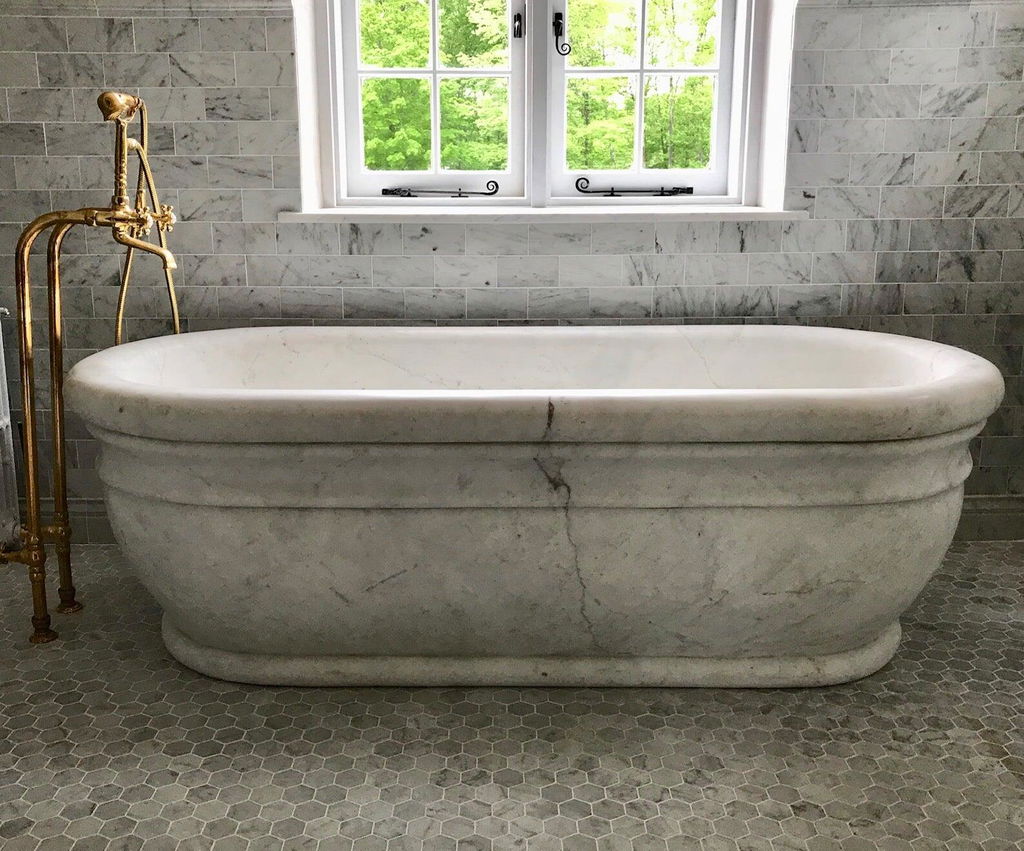
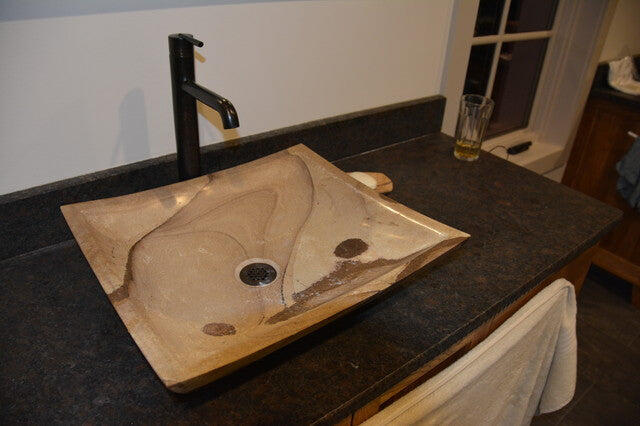
In high-end luxury bathroom design, specifying a premium marble pedestal sink has become a premier choice for premium hospitality developments and bespoke high-end residences. A luxury marble sink stands as an undisputed visual focal point, celebrated for its sculptural and elegant form. The unique natural veining, substantial weight, and minimalist geometric lines of a custom natural stone sink instantly elevate an ordinary wash area into a gallery-style architectural statement, ideal for upscale villas, penthouses, and bespoke commercial developments.
However, for architects, interior designers, builders, and developers, a custom marble sink is far more than a stunning piece of art—it represents a rigorous hidden engineering challenge. Unlike traditional vanity basins that feature cabinetry to easily conceal pipework, a masterfully carved marble basin relies on an elegant, solid, or semi-hollow marble column for support. This means that specification teams must ensure all hot and cold supply lines, drainage traps, and shut-off valves are perfectly aligned and completely integrated within an exceptionally tight internal space during the initial rough-in phase.
The execution of the rough-in plumbing directly dictates the final visual success of the installation for any stone bathroom sink. A well-planned hidden plumbing scheme allows a heavy marble wash basin to appear as if it is floating or naturally growing out of the space. Conversely, improper positioning can result in exposed, unsightly flex-hoses, or worse, force structural modifications to irreplaceable natural stone. From the professional perspective of architectural design and jobsite execution, this comprehensive guide deconstructs the 10 core plumbing pathways and faucet configurations to help your engineering and specification teams master this uncompromising aesthetic.
1. Marble Pedestal Sink Design: Engineering and Space Challenges
Before finalizing any plumbing schematics for a luxury marble sink installation, the design and construction teams must thoroughly understand the physical constraints of premium stone pedestal units. The majority of high-end marble pedestal sink models are either meticulously engineered as a tight interlocking two-piece assembly or shaped through advanced custom fabrication from a single continuous block of natural stone to create a monolithic carved marble basin.
To ensure structural integrity and the safe load-bearing capacity of a premium natural stone sink, the pedestal column walls must retain a realistic material thickness, typically ranging between 3 to 5 centimeters. This structural requirement leaves an exceptionally narrow and restrictive internal cavity (hollow core) for routing utilities. If the drainage or water supply rough-ins deviate from the absolute center axis during the wall framing or early plumbing phases, even by a few centimeters, the lines will fail to fit inside the stone pillar. Managing this tight tolerance is a critical pain point in stone bathroom sink installation, making early shop drawing coordination mandatory for builders and developers to achieve flawless natural stone craftsmanship.
2. Wall Drain System Guide: Achieving a Clean and Concealed Look
In modern luxury residential projects and upscale hospitality bathroom design, a wall drain system (also known as a wall discharge configuration) is the most prevalent and highly recommended drainage choice for a marble pedestal sink. In this setup, wastewater exits the basin drain outlet and immediately travels along a horizontal pipe straight into the wall cavity, where it joins the building's vertical waste stack.
From a visual standpoint, the wall drain configuration offers unparalleled aesthetic benefits for a luxury marble sink. Because the waste pipe exits horizontally out the back of the basin and disappears into the wall surface, the flooring underneath and the space behind the pedestal column remain completely open and uninterrupted. This "zero-pipe-on-floor" look perfectly fulfills the minimalist floating aesthetic demanded by premium spaces like luxury hotels, resorts, and elite wellness centers, while simultaneously eliminating floor penetrations for effortless long-term maintenance.
3. P-Trap Plumbing for Pedestal Sinks: Standard Odor Protection
When implementing a horizontal wall drain system behind a premium natural stone sink, international and North American building codes (IPC/UPC) mandate the installation of a standard P-Trap. The geometry of a P-Trap consists of a vertical tailpiece dropping from the basin drain, a continuous U-shaped dipped curve, and a horizontal waste arm that routes directly into the wall framing.
While standard vanities can use low-cost white PVC P-Traps because they are hidden inside a cabinet, a stone bathroom sink installation leaves the rear of the unit partially exposed from low angles. Therefore, industry-best practice for interior designers and specification teams requires specifying architectural-grade metal P-Traps in premium finishes (such as brushed brass, matte black, or satin nickel) paired with a matching decorative escutcheon plate to neatly cover the wall opening. Functionally, the persistent water seal retained within the dipped curve of the P-Trap serves as a critical barrier, preventing sewer gases and pests from entering the upscale bathroom envelope.
4. Floor Drain for Pedestal Sinks: Overcoming Internal Pipe Constraints
The primary alternative to a wall-routed discharge for a marble pedestal sink is a floor drain system (floor discharge configuration). In this layout, the wastewater drops straight down from the plumbing assembly, passing vertically through a cutout in the finish flooring and subfloor to connect with the waste pipe network below. This layout is most frequently specified by architects in historic renovations, adaptive reuse projects, or older building retrofits where modifying structural masonry or fire-rated walls for a horizontal drain is structurally unfeasible.
While floor drains provide localized flexibility during rough-in placement without requiring wall penetrations, they introduce substantial spatial challenges inside a carved marble basin. Because the drain runs vertically into the ground, the entire pipe run must be completely encased within the hollow core of the stone pillar. This requires precise core-drilling of the stone base and perfectly aligned floor flanges. Builders must double-check the exact internal diameter of the specified column to ensure it can gracefully house this vertical track without compromising the structural integrity of the marble wash basin.
5. S-Trap Plumbing Layout Risks: Siphonage and Modern Restrictions
When a vertical floor drain system is deployed beneath a natural stone sink unit, traditional plumbing layouts historically relied on an S-Trap configuration. An S-Trap features a double-curved design resembling an "S" shape, which connects the upper basin drain directly to the vertical floor opening without hitting a wall vent.
Although S-Traps are common in vintage properties, they are heavily restricted or outright prohibited under modern building codes for new commercial developments and premium residential installations. The restriction is a matter of fluid mechanics: when a large volume of water drains rapidly from a deep luxury marble sink, the velocity of the water rushing down the continuous vertical S-curve creates a powerful vacuum siphon. This siphonage phenomenon often sucks the protective water barrier completely out of the trap chamber, leaving it dry. Without a valid water seal, dangerous and foul-smelling sewer gases can freely backdraft into the living space. For modern compliant installations utilizing floor entries, technical specification teams must design engineered venting or utilize approved specialized P-Trap-to-floor adapter fittings.
6. Exposed Supply Lines Layout: Practical Residential Advantages
Beyond managing waste discharge, a flawless custom marble sink installation must meticulously plan for hot and cold water supply feeds. The first primary method is an exposed supply lines configuration. In premium luxury residential projects, "exposed" does not imply a disorganized or messy installation; rather, it indicates that the metallic shut-off angle valves and the braided stainless steel or copper supply hoses connecting to the faucet are mounted on the exterior plaster wall surface and remain partially visible behind the marble wash basin.
An exposed supply setup is highly popular in custom residential builds, villas, and estates that prioritize straightforward, long-term building operations. Its main advantage is its high installation tolerance and cost-effectiveness for the building team. Because the shut-off valves remain completely accessible on the wall face, the rough-in plumbing phase requires less extreme precision regarding depth and alignment compared to fully hidden systems. Furthermore, should a valve washer fail or a supply line require replacement over time, facilities teams can instantly service the hardware without touching the premium natural stone craftsmanship.
7. Concealed Supply Lines for Luxury Stone Pedestal Basin Designs
For ultra-luxury boutique hotel bathroom spaces, high-end commercial lounges, premium spas, and executive suites, the visibility of any mechanical hardware can disrupt the pure, sculptural intent of a custom marble piece. For these uncompromising spaces, a concealed supply lines configuration is the definitive engineering path for a marble pedestal sink.
Concealed supply plumbing elevates interior spaces to a gallery-like standard of minimalism.
The hot and cold supply lines are routed entirely behind the finished wall studs, with water termination points positioned to align precisely with a pre-engineered rear opening or hollow inner chamber of the stone bathroom sink. Once the column is anchored into position, all valves, connectors, and flexible lines are completely enveloped within the solid stone mass. When viewed from any normal standing angle within the master bath or powder room, the mechanical infrastructure is completely invisible, allowing the luxury marble sink to stand uninterrupted as a monolithic element.
8. Deck-Mounted Faucet Layout and Rough-In Space Management Guide
The chosen style of faucet not only dictates the daily user experience but also places strict physical boundaries on the underlying hidden plumbing layout for any marble wash basin. The most classical and universally compatible configuration for a natural stone sink is a deck-mounted faucet layout.
In this arrangement, the faucet assembly—whether a single-hole mixer or a widespread three-hole traditional tap—is installed directly onto the horizontal rear stone deck of the marble pedestal sink basin itself. This layout dictates that the marble unit must be precisely drilled during the custom fabrication phase using high-precision water-jet machinery based on the exact dimensions of the specified valve trim. Because the faucet sits squarely on the stone deck, the supply lines drop vertically out of the bottom of the faucet body directly underneath the basin bowl. Consequently, the water supply rough-ins in the wall must be clustered tightly within the upper column envelope to receive these drops naturally without forcing tight, crimped pipe bends.
9. Wall-Mounted Faucet Systems: Precision In-Wall Valve Coordination
For architects and interior designers targeting a highly contemporary, architectural, and striking minimalist expression, a wall-mounted faucet system represents the pinnacle of modern hospitality bathroom design. In this advanced configuration, the top deck of the carved marble basin remains completely solid, flat, and entirely free of holes, while the faucet spout and control handles emerge horizontally from the plaster wall directly above the stone rim.
A wall-mounted configuration combined with a custom marble sink yields a breathtakingly clean aesthetic, preserving the continuous, unblemished face of premium veined stone while making the basin exceptionally easy to wipe down. However, this configuration demands uncompromising precision from builders during the early rough-in phase. The heavy-duty brass in-wall mixer valve must be securely braced inside the wall framing long before the finish marble is installed. Specification teams must precisely calculate the finish wall thickness, the final rim height of the pedestal, and the exact spout reach to ensure water lands perfectly over the drain center of the stone bathroom sink, preventing unwanted splashing or incorrect spatial clearances.
10. Architectural Classification Matrix for Pedestal Sink Plumbing
In summary, engineering a successful marble pedestal sink installation requires viewing the plumbing infrastructure not as isolated pipes, but as an integrated mechanical system. For specifiers, general contractors, and design teams working on luxury residential projects or commercial developments, the overall decision-making matrix can be systematically organized into: 2 Drainage Paths × 2 Water Supply Layouts × 2 Faucet Mount Variations.
Core Mechanical Module |
Modern Minimalist Option A (Concealed System) |
Classical Legacy Option B (Exposed System) |
Drainage System (Drain Type) |
Wall Drain (Horizontal Wall Discharge) |
Floor Drain (Vertical Floor Discharge) |
Trap Configuration (Trap Type) |
P-Trap (Code-Compliant, Global Standard) |
S-Trap (Historical Retrofit, Siphonage Risk) |
Water Supply Layout (Supply Lines) |
Concealed Supply (Hidden Inside Column) |
Exposed Supply (Surface-Mounted Valves) |
Faucet Configuration (Faucet Set) |
Wall-Mounted (In-Wall Valve Assembly) |
Deck-Mounted (Pre-Drilled Basin Rim) |
In high-end architectural execution, top-tier luxury projects for resorts, penthouses, and boutique hotel bathroom spaces almost universally select the ultimate minimalist combination: "Wall Drain + P-Trap + Concealed Supplies + Wall-Mounted Faucet" to achieve an absolute absence of visible hardware. Meanwhile, high-end historic renovations or villas may intentionally utilize an organized "Floor Drain + P-Trap Adapter + Premium Exposed Supplies + Deck Faucet" setup to honor structural parameters while celebrating high-grade metallic finishes. Regardless of the chosen path, early cross-trade coordination via detailed section drawings remains the single path to flawless execution.
Conclusion: Harmonizing Luxury Design with Precise Engineering
The timeless allure of a premium marble pedestal sink stems from the breathtaking beauty of a luxury marble sink, but its realization relies completely on the rigor of precise architectural engineering and elite natural stone craftsmanship. When a solid, masterfully carved marble basin stands flawlessly within a boutique interior, its clean profile is supported by an invisible network of perfectly aligned rough-ins, code-compliant water traps, and hidden valves. For architects, interior designers, and specification teams, mastering the spatial mechanics of these plumbing configurations is the vital link that transforms an ambitious conceptual rendering into an enduring, high-performance physical reality across high-end villas, penthouses, spas, and global luxury hotels.
Are you looking to deepen your technical knowledge of premium stone fabrication, optimize rough-in specifications for an upcoming commercial build, or source an exquisite custom marble sink for an ultra-luxury project? Connect with MarbleBee to explore our curated technical resources, review specification documents, and discover how our masters of stone craftsmanship bring world-class architectural visions to life.