Understanding Classical Marble Gazebos: An Architectural Guide to Design & Customization

Planning a classical marble gazebo involves much more than selecting an attractive design. From the columns and roof style to decorative carvings, flooring, balustrades, and natural stone selection, every architectural element influences the structure's appearance, proportions, and authenticity. Understanding these details before finalizing a design helps you make informed decisions and communicate your vision clearly with architects, landscape designers, or stone craftsmen.
Whether you're a homeowner, architect, landscape designer, builder, or simply exploring ideas for a custom project, this guide explains the architectural features, design options, customization possibilities, and material choices that define a classical marble gazebo. By the end, you'll understand how each element contributes to the overall design, making it easier to create a gazebo that complements your property while staying true to the principles of classical architecture.


3 Characteristics That Define a Classical Gazebo
Every authentic classical gazebo combines key architectural features that create its timeless identity. Before exploring individual elements, let's look at the defining principles that set a classical gazebo apart from other outdoor structures.
- Balanced proportions
- Classical architectural details
- Quality craftsmanship and natural stone
- Materials, colors, and dimensions that complement the surrounding architecture
These four characteristics define every classical gazebo. Balanced proportions create harmony, architectural details establish its identity, skilled craftsmanship adds refinement, and the right materials, colors, and dimensions ensure it complements its surroundings. Together, they create a timeless, cohesive design explored in the following sections.


What Defines a Classical Marble Gazebo?
A classical marble gazebo is defined by its architectural design, carefully proportioned geometry, refined appearance, and intricately carved details rather than its material alone. Inspired by classical architecture, it combines balanced proportions with skilled craftsmanship to create an outdoor structure that is both functional and architecturally distinctive.
Its defining architectural components include:
- Classical columns
- A proportioned roof structure
- Decorative capitals, entablatures, and cornices
- Ornamental stone carvings
- Thoughtfully designed flooring
- Balustrades where appropriate
- Premium natural stone craftsmanship
Together, these elements create the timeless architectural character that distinguishes a classical gazebo from other outdoor structures. In the following sections, we'll examine each component to understand its purpose, design options, and contribution to the overall composition.
Now that you understand what defines a classical marble gazebo, it's time to explore the individual architectural elements that shape its design. We'll begin with the most recognizable and influential feature of classical architecture: the columns. Their proportions, detailing, and arrangement establish the visual framework that guides every other design decision.


The 5 Classical Column Orders
Classical architecture recognizes 5 primary column orders. While all perform the same structural function, each possesses distinctive proportions, profiles, and decorative details that create a unique architectural character.
From the simplicity of the Tuscan order to the elaborate ornamentation of the Composite order, each style offers a different aesthetic while following the same principles of classical design.
Tuscan Columns
Tuscan columns are the simplest of all the classical orders. They feature a smooth, unfluted shaft, a plain capital, and a simple molded base with virtually no ornamentation. Their clean lines and understated appearance make them ideal for projects where subtle elegance and timeless simplicity are preferred over decorative detail.
Commonly used for:
- Contemporary classical homes
- Country estates
- Garden gazebos
- Parks and residential landscapes
Doric Columns
Doric columns are bold and sturdy, featuring simple capitals, restrained ornamentation, and well-balanced proportions. Compared to the Tuscan order, they often include fluted shafts and slightly more architectural detailing while maintaining a strong, timeless appearance. Their disciplined design makes them an excellent choice when strength and simplicity are preferred over elaborate decoration.
Commonly used for:
- Estate homes
- Formal gardens
- Traditional landscapes
- Large outdoor settings
Ionic Columns
Ionic columns are more slender and refined than Doric columns. Their defining feature is the pair of spiral scrolls, known as volutes, carved into the capital. These elegant details create a lighter and more graceful appearance while maintaining balanced classical proportions.
Ideal for:
- Luxury residences
- Courtyards
- Landscaped gardens
- Transitional classical designs
Corinthian Columns
Corinthian columns are among the most decorative of the classical orders. Their capitals are richly carved with layered acanthus leaves and delicate scrolls, creating exceptional depth and craftsmanship. Combined with their slender proportions, they give the gazebo a formal and luxurious architectural presence.
Often selected for:
- Grand villas
- Hotels and resorts
- Estate gardens
- Landmark projects
Composite Columns
Composite columns combine the spiral volutes of the Ionic order with the elaborate acanthus leaf carvings of the Corinthian order. This creates the richest and most ornate classical column style, making it an excellent choice for gazebos intended to become the architectural centerpiece of a property.
Recommended for:
- Luxury estates
- Public gardens
- Civic landscapes
- Monumental architectural pro


Choosing the Right Column Style
Selecting a column style is about more than appearance. It should reflect the scale of the gazebo, the architectural style of the property, and the desired level of ornamentation.
- Tuscan creates the cleanest and most understated appearance with smooth shafts and minimal decoration.
- Doric offers a bold, timeless appearance with restrained architectural detailing.
- Ionic introduces elegance through its graceful scroll-shaped capitals.
- Corinthian showcases exceptional craftsmanship through richly carved acanthus leaf capitals.
- Composite delivers the highest level of ornamentation by combining the defining features of both the Ionic and Corinthian orders.
Regardless of the style, maintaining the correct proportions and spacing between columns is more important than choosing the most decorative design. Well-proportioned columns create visual balance throughout the gazebo and establish the architectural framework for every element that follows.
Design Insight: While decorative capitals often attract the most attention, experienced designers always prioritize proportion, spacing, and scale first. A well-proportioned Tuscan, Doric, or Ionic gazebo will almost always appear more elegant than an overly ornamented structure with incorrect proportions.
With the column arrangement established, the next step is designing the roof. Its shape, proportions, and architectural detailing complete the gazebo's silhouette while maintaining the balance established by the columns below.


Roof Design: Shaping the Silhouette of a Classical Gazebo
The roof is one of the most recognizable features of a classical gazebo. Beyond providing shelter, it defines the structure's silhouette, proportions, and architectural presence. A well-proportioned roof complements the columns below, creating a balanced composition that appears elegant from every angle.
The size, shape, and pitch of the roof should always remain proportional to the gazebo's overall dimensions. An oversized roof can make the structure appear visually heavy, while one that is too small may seem disconnected from the supporting columns.
Common roof styles include:
- Dome Roof – Inspired by classical and Renaissance architecture, ideal for circular gazebos and formal landscapes.
- Octagonal Roof – One of the most popular designs, offering balanced proportions and excellent symmetry.
- Pyramid Roof – Features four sloping sides that meet at a central point, creating a clean and elegant profile.
- Gabled Roof – Two sloping roof planes joined by a ridge, often enhanced with a decorative pediment for a traditional classical appearance.
Architectural details such as cornices, pediments, finials, and carved mouldings further enhance the roof without overpowering the overall design. When proportioned correctly, they create a seamless transition between the roof and the supporting columns.


Capitals, Entablatures & Cornices: Connecting the Columns to the Roof
Once the columns and roof are established, these architectural details complete the composition. Capitals, entablatures, and cornices connect the vertical columns to the horizontal roof structure while adding depth, proportion, and refinement.
The Capital
The capital is the decorative top section of a column where it supports the structure above. Besides carrying the entablature, its design distinguishes one classical column order from another, ranging from the simple Doric profile to the richly carved Corinthian capital.
The Entablature
Positioned directly above the columns, the entablature is the horizontal architectural section that supports the roof. It traditionally consists of three parts:
- Architrave – The lower structural beam resting directly on the columns.
- Frieze – The central decorative band, often featuring carved motifs and ornamental patterns.
- Cornice – The projecting upper section that frames the roof and creates distinctive shadow lines.
Together, these elements provide structural continuity while giving the gazebo its balanced classical appearance.
Decorative Stone Carvings: The Finishing Touches That Define Classical Elegance
Decorative stone carvings add refinement and individuality to a classical marble gazebo. Rather than covering every surface, classical architecture uses carvings selectively to highlight important architectural features and showcase exceptional craftsmanship.
Common decorative motifs include:
- Acanthus leaves – Rich leaf carvings traditionally used on Corinthian and Composite capitals.
- Rosettes – Circular floral motifs commonly found on ceiling panels and decorative borders.
- Laurel wreaths – Classical symbols of honor carved into friezes, panels, and medallions.
- Egg and dart moulding – A repeating decorative pattern frequently used along cornices and entablatures.
- Greek key pattern – A continuous geometric border that reinforces symmetry and definition.
- Floral scrollwork and vines – Flowing decorative patterns that soften architectural transitions.
Where Are Decorative Carvings Used?
Depending on the design, decorative carvings can be incorporated into various architectural elements, including:
- Column capitals
- Cornices and entablatures
- Ceiling panels and domes
- Balustrades and handrails
- Entrance steps and plinths
- Flooring medallions and decorative borders
The level of ornamentation should always complement the overall architectural style of the gazebo. Simpler designs benefit from restrained detailing, while grander structures can accommodate richer carvings. The objective is to enhance the architecture rather than overwhelm it.


Flooring Design: Creating a Strong and Elegant Foundation
The flooring forms the architectural base of a classical gazebo, defining the usable space while reinforcing its proportions and symmetry. A thoughtfully planned floor complements the columns and roof, completing the overall composition.
Popular flooring designs include:
- Solid slab flooring for a clean, seamless appearance.
- Geometric layouts that reinforce symmetry and proportion.
- Circular or radial patterns that naturally draw attention toward the center of the gazebo.
- Decorative border inlays that frame the floor and define its perimeter.
- Central medallions that create an elegant focal point beneath the roof.
Natural stone remains the preferred flooring material for classical gazebos. Marble offers a refined finish, while limestone, travertine, and sandstone introduce softer textures and warmer architectural character.
Regardless of the material or layout, the flooring should support the architecture rather than compete with it, creating a cohesive transition between the gazebo and its surrounding landscape.
Balustrades: Framing the Space with Classical Elegance
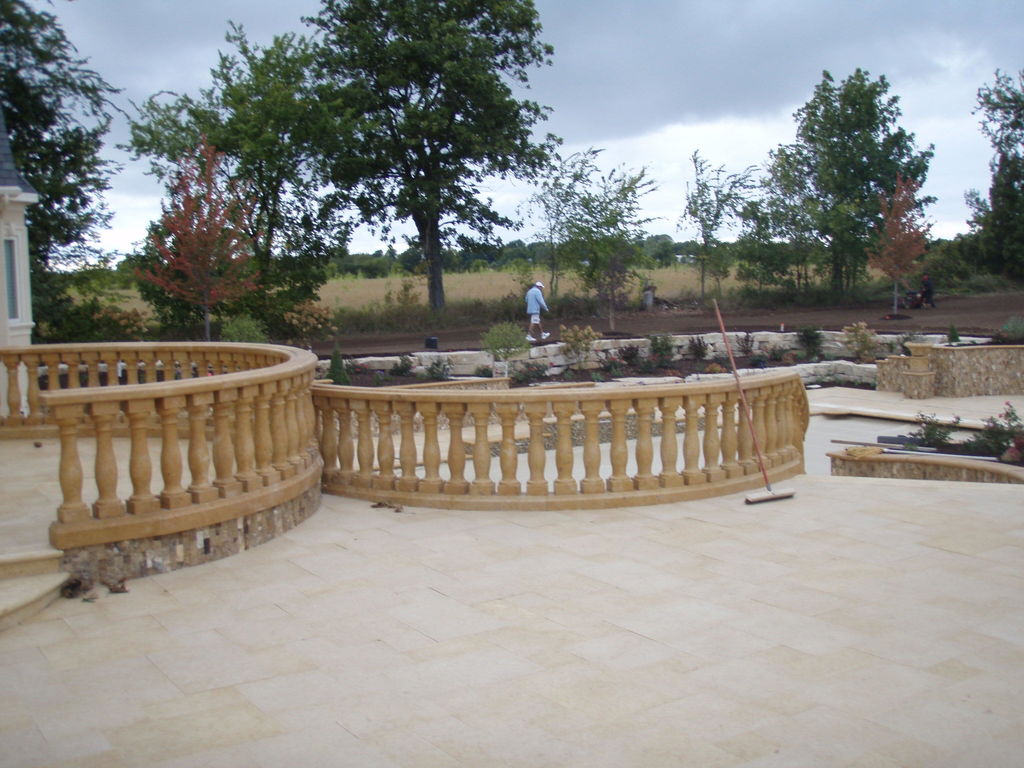
Balustrades create a graceful boundary without fully enclosing the gazebo. While not every classical gazebo includes them, they add definition, visual balance, and architectural detail when incorporated into the design.
A classical balustrade consists of three primary components:
- Handrail – The upper rail that forms the top edge of the balustrade.
- Balusters – Evenly spaced vertical supports that create the characteristic classical appearance.
- Base Rail – The lower section that supports and aligns the balusters.
Depending on the design, balustrades may be incorporated as:
- Full perimeter balustrades for a formal and enclosed appearance.
- Partial balustrades to define entrances or seating areas.
- Open layouts that omit balustrades for a lighter, more open architectural expression.
Balustrades are typically crafted from the same natural stone as the gazebo to maintain visual continuity. Their spacing, height, and proportions should complement the scale of the columns and the overall structure.
When thoughtfully integrated, balustrades provide a refined transition between the gazebo and the surrounding landscape while completing the classical architectural composition.


Planning Your Classical Marble Gazebo: A Step-by-Step Checklist
Understanding the architectural elements of a classical gazebo is only the first step. The success of a custom project depends on how well those elements are planned, coordinated, and adapted to your property. Before production begins, take time to evaluate every design decision so the finished gazebo becomes a natural extension of your home's architecture and landscape.
Step 1: Define the Purpose of Your Gazebo
Start by deciding how the gazebo will be used. Whether it is designed as a peaceful garden retreat, an outdoor dining pavilion, an entertainment space, a wedding structure, or the focal point of a landscape, its intended purpose will influence the size, layout, seating arrangement, and overall architectural design.
Step 2: Finalize the Architectural Design
Review every architectural element discussed in this guide and ensure they work together as one cohesive composition.
Before approving the design, consider:
- Column style and proportions
- Roof shape and architectural detailing
- Capitals, entablatures, and cornices
- Decorative stone carvings
- Flooring layout and patterns
- Balustrades, where appropriate
Rather than selecting each feature independently, evaluate how every element contributes to the overall balance and architectural character of the gazebo.
Step 3: Select the Right Natural Stone
Material selection has a significant influence on both appearance and long-term performance. While marble remains the most popular choice, limestone, travertine, sandstone, and granite each offer distinct textures, colors, and architectural character.
When comparing materials, consider:
- Natural stone color
- Veining and texture
- Surface finish
- Durability and maintenance requirements
- Compatibility with your property's architecture and landscape
The best material is not always the most expensive. It is the one that complements the overall design while meeting your functional and aesthetic requirements.


Step 4: Visualize the Design Before Production
Never approve a custom gazebo based solely on sketches or verbal discussions. Professional drawings and visualizations allow you to review proportions, materials, and architectural details before fabrication begins.
Request:
- Architectural drawings
- 3D renderings
- Material samples
- Stone finish samples
- Site mockups or digital visualizations whenever possible
Reviewing the design from multiple perspectives helps identify improvements before production, reducing the likelihood of costly modifications later.
Step 5: Review Every Detail Before Approval
Before giving final approval, carefully review the complete design.
- Overall dimensions and proportions
- Roof size relative to the column layout
- Architectural detailing and carving placement
- Flooring patterns and geometry
- Stone color, finish, and material selection
- How the gazebo complements the property's architecture and surrounding landscape
Small adjustments at this stage often make a significant difference to the finished result.


Step 6: Work with an Experienced Architectural Stone Manufacturer
A classical gazebo is a custom architectural structure that requires careful planning, technical expertise, and skilled craftsmanship. Working with experienced architects, landscape designers, builders, and natural stone manufacturers helps ensure every design decision is accurately translated into the finished structure.
At Marblebee, every classical gazebo is developed through a collaborative design process. Our team works closely with homeowners, architects, designers, and builders to understand the project's architectural style, site conditions, and customization requirements before production begins. From selecting the right natural stone and preparing custom shop drawings to creating detailed design visualizations, every stage is carefully reviewed to achieve a gazebo that is architecturally balanced, structurally sound, and uniquely suited to its surroundings.
Final Thoughts
A classical marble gazebo is much more than an outdoor structure. It is a carefully planned architectural feature where proportions, craftsmanship, natural stone, and decorative details work together to create a timeless design.
Understanding each architectural element allows you to make informed design decisions, communicate your ideas more effectively, and confidently customize a gazebo that reflects your property's character. By investing time in planning, reviewing materials, and collaborating with experienced professionals, you can create a classical gazebo that remains elegant, functional, and architecturally authentic for generations.