How to Use Taj Mahal Marble in Your Kitchen: Beautiful Design Ideas

Taj Mahal marble is one of those natural stones that feels almost made for the kitchen. Loved by homeowners and interior designers for its warm, refined appearance, its soft neutral tones sit comfortably beside warm white cabinetry, natural oak, walnut, dark brown finishes, brushed brass, black metal, and stainless steel. This versatility gives you considerable freedom to design or update a kitchen without worrying that the stone will compete with the other materials in the room.


But where should you use Taj Mahal marble to make the most of it? In this guide, we have gathered seven beautiful ways to incorporate the stone into your kitchen, from statement islands and waterfall edges to full-height backsplashes, integrated sinks, breakfast bars, countertops, and dining tables. You will also see what to pair with it and how to build the rest of your kitchen around the stone to create a space that truly feels like the heart of the home.
A quick note about the name: Taj Mahal is also widely sold as Taj Mahal Quartzite. Marble and quartzite are not the same type of natural stone, and their performance and care requirements can differ. Stone names and classifications can also vary between suppliers and markets. Before purchasing, ask your supplier to confirm exactly what material you are buying and follow the care and fabrication recommendations for that specific slab.


What Colors and Materials Pair with Taj Mahal Marble?
Taj Mahal marble has a warm cream base with subtle beige, taupe, and soft gray movement, which gives you considerable freedom when choosing surrounding materials. The safest approach is to stay with warm neutrals and natural materials, then introduce darker or metallic accents where you want more contrast.
Warm White for a Light, Calm Kitchen
Choose ivory, cream, warm white, or soft greige for cabinetry and walls. These shades sit naturally beside the creamy character of the stone. Very cold blue-white shades can feel disconnected from its warmer tones.
Natural Oak for a Warm Contemporary Look
Light or medium oak works beautifully for cabinetry, island bases, shelving, flooring, and dining furniture. It strengthens the natural warmth of the marble without competing with its pattern.
Walnut for Richer Contrast
Use walnut when you want deeper color around the marble. It works particularly well on island cabinetry, tall cabinets, dining furniture, and breakfast bars.
Dark Brown for a More Dramatic Kitchen
Espresso, chocolate, and other deep brown finishes create stronger contrast and make the lighter stone more prominent. They often work best on selected cabinetry or an island rather than every surface.
Black for Defined Modern Contrast
Matte black works well for window frames, faucets, cabinet handles, pendant lights, stools, and smaller architectural details. Use it as an accent rather than the dominant color.
Gold, Brass, and Bronze for Warm Accents
Brushed gold, brass, champagne gold, and bronze complement the beige and golden undertones of Taj Mahal marble. They are particularly effective for faucets, handles, lighting, and decorative hardware.
Silver and Stainless Steel for a Cleaner Look
Stainless steel, brushed nickel, chrome, and other silver finishes give the stone a cleaner, more contemporary character. They are practical choices for appliances, sinks, faucets, range hoods, and hardware.


Best Materials to Use Around Taj Mahal Marble
| Material / Finish | Best Places to Use It |
|---|---|
| Warm White & Cream | Main cabinetry, upper cabinets, walls, ceilings |
| Natural Oak | Cabinetry, kitchen island base, flooring, open shelves, dining furniture |
| Walnut | Island base, tall cabinets, breakfast bar, dining furniture |
| Dark Wood | Lower cabinets, feature cabinetry, island base, dining furniture |
| Brushed Brass & Champagne Gold | Faucets, cabinet handles, pendant lights, trims, small details |
| Bronze | Faucets, hardware, lighting, cabinet handles, frames |
| Matte Black Metal | Faucets, handles, window frames, pendant lights, stools |
| Stainless Steel & Brushed Nickel | Appliances, sinks, range hoods, faucets, hardware |
| Glass | Cabinet doors, display cabinets, shelving, partitions, pendant lights |
| Textured Plaster | Walls, range hood surrounds, feature walls, adjoining surfaces |
| Neutral Porcelain | Kitchen flooring, secondary walls, high use areas |
For the most cohesive result, start with Taj Mahal marble as the focal material and limit the surrounding palette to a few complementary finishes. Warm white, natural oak, and brushed brass create a softer setting. Walnut and bronze bring greater depth. Black metal or stainless steel can give the same stone a cleaner, more contemporary character.


7 Beautiful Ways to Incorporate Taj Mahal Marble in Your Kitchen
Taj Mahal marble can become the defining material of a kitchen or appear in carefully selected areas. How much you use depends on the size of the room, the movement within your particular slab, and whether you want the stone to act as a subtle background or the main visual feature.
Here are seven ways to use it effectively.
1. Create a Statement Kitchen Island
A central island gives Taj Mahal marble enough surface area for its natural movement and tonal variation to be appreciated. It is particularly effective in larger kitchens where the island is visible from several directions or forms the visual center of an open plan living space.
Let the slab guide the design. A quieter piece can create an understated island, while a slab with stronger movement can become the focal point of an otherwise restrained kitchen.
For the cabinetry below, warm white creates a seamless appearance, while oak, walnut, or dark wood gives the stone more definition.


2. Add Waterfall Edges to the Island
A waterfall edge continues the stone from the horizontal countertop vertically down one or both sides of the island. This gives Taj Mahal marble a more architectural presence and allows the natural pattern to remain visible from different viewpoints.
The fabrication matters here. Ask your fabricator how the adjoining pieces will be cut and aligned so the movement transitions naturally from the countertop to the vertical surface.
You do not necessarily need waterfall ends on both sides. A single waterfall edge can be enough to define the island without making the kitchen feel overly covered in stone.


3. Continue Taj Mahal Marble onto a Full Height Backsplash
Instead of ending the stone at the countertop, carry it vertically onto the wall behind the preparation area or range.
A full height backsplash removes the visual interruption created by a separate tile material and gives the kitchen a cleaner, more continuous appearance. It is particularly effective when the slab contains gentle diagonal or horizontal movement that can be positioned intentionally across the wall.
If the backsplash is intended to become a major feature, inspect the slab before cutting and discuss the layout with your fabricator. The section chosen for the wall can have a major effect on the finished kitchen.


4. Extend Taj Mahal Marble into a Breakfast Bar
A breakfast bar is a practical way to take Taj Mahal marble beyond the main preparation area. An island countertop can extend into a dedicated seating surface, creating a natural place for breakfast, coffee, casual meals, or conversation.
Think carefully about the depth of the seating area and the amount of unsupported stone. Longer extensions may require concealed brackets or additional structural support.
Oak or walnut stools keep the setting warm and natural, while upholstered seating or slim metal frames can create a more contemporary interpretation.


5. Design an Integrated Kitchen Sink
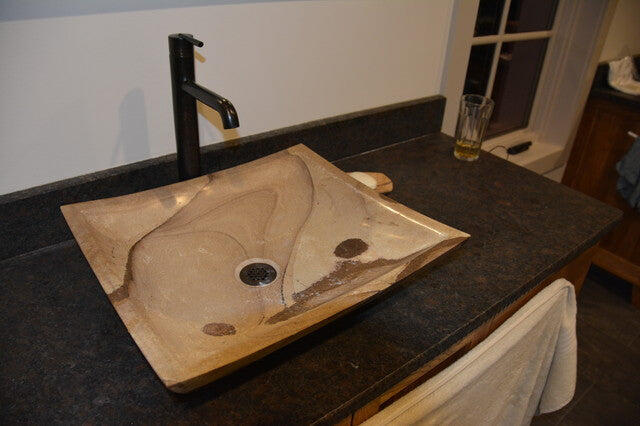
An integrated Taj Mahal marble sink brings the stone into one of the most functional areas of the kitchen. Using the same material for the countertop and sink surround creates a clean, continuous appearance with fewer visual interruptions.
This approach works particularly well in custom kitchens where the sink is intended to feel like part of the architecture rather than a separate fixture.
Integrated stone sinks require experienced fabrication. Drainage, joints, waterproofing, sealing, edge treatment, and the properties of the specific stone all need to be considered before fabrication. Confirm with your fabricator that the slab you have selected is appropriate for the application.


6. Use Taj Mahal Marble Across the Countertops
You do not need a dramatic island or elaborate stone feature to make Taj Mahal marble work beautifully in a kitchen. Using it across the main countertops can be enough.
This approach suits homeowners who want the warmth and natural movement of the stone without allowing it to dominate the entire room. It also leaves more freedom to introduce timber cabinetry, painted finishes, textured plaster, metal, or another complementary backsplash material.
Pay attention to where seams, cutouts, and changes in direction will occur. Thoughtful slab layout can make a long countertop appear much more continuous.


7. Carry Taj Mahal Marble into the Dining Area
If your kitchen and dining area share an open plan, a Taj Mahal marble dining table can carry the material beyond the working kitchen and create a visual relationship between the two spaces.
The dining table does not need to duplicate the island. A round or oval marble table can soften a kitchen dominated by straight cabinetry and a rectangular island, while a long rectangular table can reinforce a more architectural layout.
You can also vary the supporting material. Timber bases create warmth, while metal or sculptural stone bases can make the table feel more contemporary.
Used this way, Taj Mahal marble becomes a material that connects the kitchen and dining area rather than simply another decorative finish.


Practical Things to Consider Before Using Taj Mahal Marble in a Kitchen
Choosing a beautiful slab is only part of the process. A kitchen is a hardworking space, so the finish, sealing, edges, slab thickness, layout, and fabrication need just as much consideration. These decisions affect both how the stone looks and how comfortably you can live with it every day.
Choose the Right Finish for Your Kitchen
Polished marble has a smooth, reflective surface that makes its color and natural movement appear more defined. A honed finish has less shine and creates a softer, more understated appearance.
Consider the surrounding cabinetry, lighting, flooring, and other finishes when deciding how much sheen you want from the stone.
Ask Your Supplier About Sealing
Natural stone can absorb liquids depending on its composition and porosity. For countertops, islands, breakfast bars, and sink areas, ask your supplier or fabricator whether your particular slab requires sealing and what product is appropriate.
Do not assume every stone or every sealer follows the same maintenance schedule. Follow the recommendations provided for the material installed in your kitchen.


Clean Spills Promptly
Kitchen surfaces regularly come into contact with lemon, vinegar, wine, tomatoes, oils, coffee, and other foods. Acidic substances are particularly important with calcite rich marble because they can react with the surface and cause etching.
Clean spills promptly and use a cleaner recommended for the specific natural stone. Avoid harsh, acidic, or abrasive household cleaners unless your stone professional confirms they are suitable.
Pay Extra Attention to High Use Areas
Sink and cooktop areas experience more water, spills, heat, and daily activity than many other parts of the countertop. Corners, cutouts, and breakfast bar overhangs also require careful fabrication.
Discuss how you intend to use the kitchen with your fabricator so joints, cutouts, supports, and other details can be planned around the actual demands of the space.


Choose Practical Edge Profiles
The countertop edge affects both appearance and everyday use. Very sharp or delicate profiles may be more vulnerable to chipping in a busy kitchen.
Straight, eased, subtly rounded, or thicker built up profiles can be selected according to the kitchen design, slab thickness, and intended use.
Confirm Slab Thickness and Structural Support
Large islands, waterfall ends, breakfast bar extensions, integrated sinks, and marble dining surfaces can place considerable weight on the cabinetry or supporting structure.
Some designs require additional reinforcement, particularly where stone extends beyond the cabinetry below. Support requirements should be determined according to the slab thickness, dimensions, cutouts, stone properties, and installation conditions rather than appearance alone.
Always Look at the full slab.
Never choose natural stone based only on a small sample. A sample can show the general color, but it cannot show the complete veining, movement, tonal variation, or natural characteristics of the slab you will receive.
This becomes especially important for a large island, waterfall end, or full-height backsplash where a substantial part of the slab remains visible.
Inspect the actual slab whenever possible. You can also ask your fabricator to show you the proposed cutting and layout before fabrication so you know which areas of the stone will appear on each surface.
Confirm Exactly What Stone You Are Buying
Taj Mahal is widely sold as Taj Mahal Quartzite, while some suppliers and markets may use different commercial naming or classification.
Do not rely on the trade name alone. Ask your supplier to confirm the geological type of the slab you are purchasing. Marble and quartzite can behave differently when exposed to acids, scratches, stains, heat, and everyday kitchen use.
Once the material has been confirmed, follow the cleaning, sealing, fabrication, and maintenance recommendations appropriate for that specific stone.


Final Thoughts
Before finalizing a kitchen with Taj Mahal marble, look at real kitchen references and compare how the stone works with different cabinetry colors, wood tones, metal finishes, island styles, and architectural settings. Once you have a direction, ask your interior designer for mockups or visualizations so you can see how the stone and surrounding materials will work together before fabrication begins.
Most importantly, choose the actual slab with care. Natural variation means every piece has its own movement, tone, and character. The right slab can become the starting point for the entire kitchen palette, from cabinetry and flooring to hardware and furniture.
At Marblebee, we can help you take that idea from inspiration to execution. Explore and select Taj Mahal marble slabs, discuss your kitchen requirements with our team, and work with us on custom stone fabrication and interior décor projects.
With its warm neutral palette and natural movement, Taj Mahal marble can work across traditional, transitional, and contemporary kitchens. The key is not simply using more stone, but deciding where it will have the greatest visual impact and designing the surrounding materials around it.