Beyond Marble: Why Onyx is the Designer’s Power Move

Luxury, for a long time, was defined by what was familiar. Materials that signaled permanence, symmetry, and restraint shaped the language of high-end interiors. Today, that definition has shifted. Luxury is no longer about what everyone recognizes. It is about what feels personal, intentional, and impossible to replicate.
In this evolving design landscape, Onyx has quietly emerged as one of the most compelling materials to work with. Not because it replaces anything, but because it introduces something entirely different. It brings emotion into architecture. It turns surfaces into experiences. It allows a space to feel curated rather than assembled.
Choosing Onyx is not a decorative decision. It is a design move that changes how a space is perceived, how it is lit, and how it is remembered.


Understanding Onyx as a Design Medium
Onyx is a natural stone formed through the slow deposition of minerals in limestone caves, resulting in layered bands of color and remarkable translucency. Unlike denser stones, its structure allows light to pass through, which is where its true potential lies.
From a design standpoint, Onyx behaves less like a surface and more like a medium. It reacts to light in a way few materials can. When backlit, it softens, glows, and almost dissolves into the surrounding architecture. During the day, it appears sculptural and grounded. By evening, it becomes atmospheric.
Its performance requires thoughtful handling. Onyx is softer than many commonly used stones, which makes it less suitable for high-impact surfaces but ideal for controlled environments where its visual qualities can take precedence. It demands precision in installation, careful sealing, and an understanding that its value lies not in durability alone, but in the experience it creates.


Designing with Onyx for Maximum Impact
Onyx in Living Spaces: Where and How to Use It
In a living room, Onyx has the ability to define the entire spatial hierarchy. A backlit Onyx wall placed behind a seating arrangement does more than act as a backdrop. It becomes the visual anchor of the room. The glow introduces depth, while the natural veining adds movement that no artificial material can replicate.
Beyond vertical surfaces, Onyx translates beautifully into furniture elements such as coffee tables and side tables. An Onyx coffee table, particularly with a softly illuminated or polished top, introduces a sculptural quality at the center of the room. It grounds the seating arrangement while adding a layer of visual richness. Side tables in Onyx work in a more subtle way, offering moments of detail that enhance the overall composition without competing for attention.


These applications extend into other areas of the home as well. In bedrooms, Onyx side tables or accent pieces introduce a refined softness when paired with warm lighting. In lounge spaces or informal seating areas, smaller Onyx elements can be used to echo the larger design language without overwhelming the setting.
Scale plays a critical role here. Large, uninterrupted slabs allow the pattern to read clearly, almost like a piece of art, while smaller applications should remain clean and well-proportioned to avoid visual clutter. Pairing Onyx with neutral upholstery, soft textiles, and restrained color palettes ensures that the material remains the focal point without dominating the space.
Lighting must be calibrated carefully. Too harsh and the effect becomes flat. Too dim and the material loses its presence. A balanced, layered lighting approach allows the stone to reveal its depth while maintaining the overall mood of the room.
When done correctly, the space does not just look luxurious. It feels composed, where every element is intentional and connected.


Onyx in Bathrooms That Make an Impression
Bathrooms offer one of the most effective canvases for Onyx. The relatively smaller scale of these spaces allows the material to be explored more freely, creating impact without overwhelming the design. Here, Onyx moves beyond being a surface and becomes part of a sensory experience shaped by light, texture, and atmosphere.
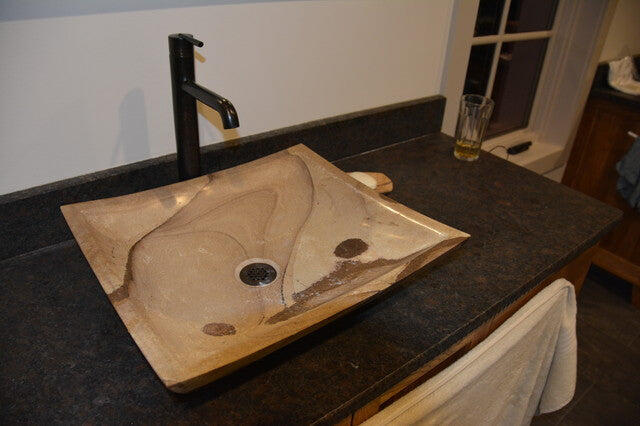
Vanities are often the starting point. An Onyx-clad vanity, especially when softly backlit, introduces a calm, diffused glow that immediately elevates the space. It shifts the visual focus from utility to experience, making even the simplest routines feel considered. The translucency of the stone allows light to pass through gently, creating depth that changes throughout the day.


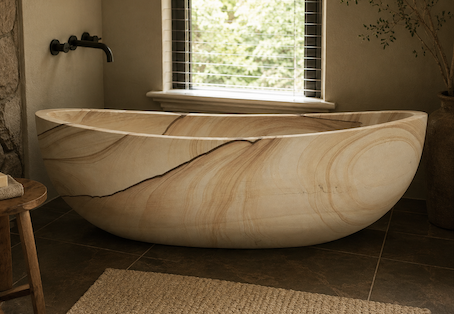
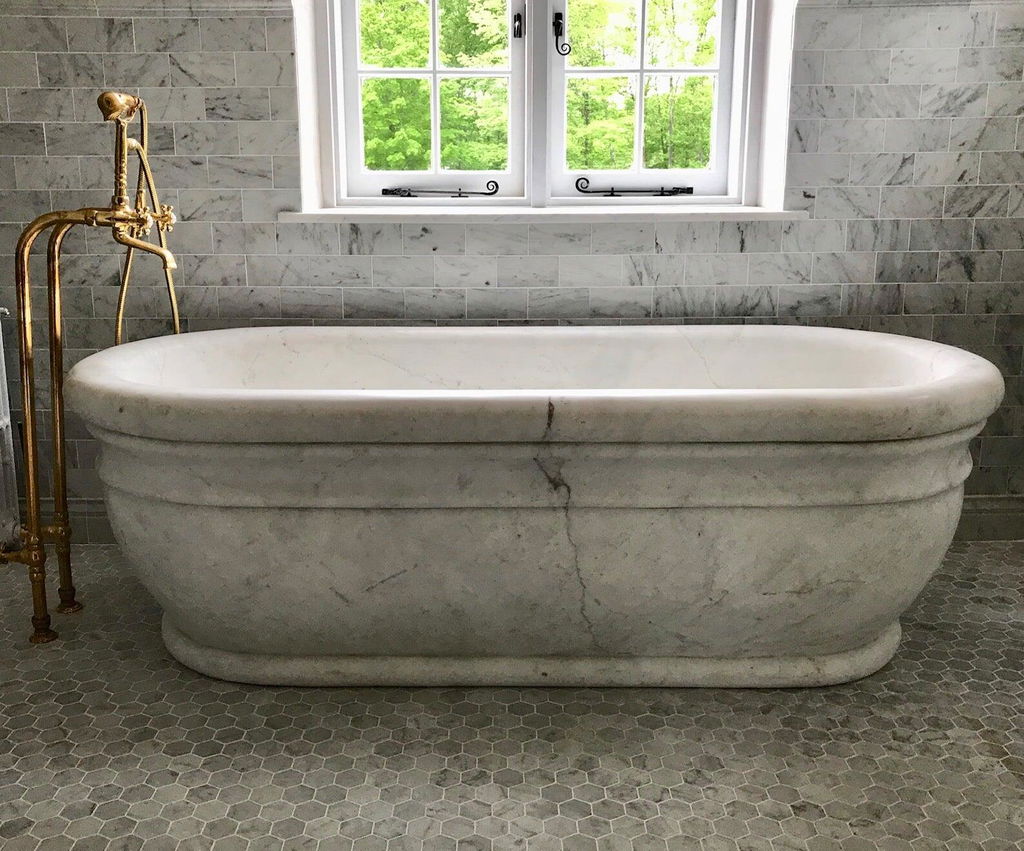
In recent years, Onyx bathtubs have emerged as one of the most sought-after elements in both residential and commercial interiors. In homes, they act as sculptural centerpieces, transforming bathrooms into private retreats. In hospitality settings, particularly luxury hotels and wellness spaces, they serve as defining features that enhance the overall guest experience. A freestanding Onyx bathtub, placed with intention and supported by soft ambient lighting, creates a moment of pause within the space. It is less about function and more about presence.
Shower areas benefit from a more restrained approach. Using Onyx as a feature panel rather than across all surfaces introduces contrast and prevents visual fatigue. The interaction between water, light, and stone adds a dynamic quality, where the material subtly shifts in appearance depending on how it is experienced.


Material pairing plays a critical role in maintaining balance. Brushed brass, soft gold, or even matte black fixtures can complement the stone without competing with it. Neutral flooring, minimal accessories, and controlled lighting temperatures allow Onyx to remain the focal point.
Ultimately, the success of Onyx in bathrooms lies in intention. It is not about creating excess, but about designing a space that feels immersive, composed, and quietly indulgent.


Dining Spaces: Elevate the Experience with Onyx
In dining spaces, Onyx shifts from being a backdrop to becoming the centerpiece. An Onyx dining table, particularly one with a translucent top, introduces a sculptural quality that transforms the act of dining into an experience.
The key here is proportion. The thickness of the slab, the design of the base, and the surrounding furniture must all be considered as part of a composition. Chairs should complement rather than compete. Lighting above the table should enhance the stone’s natural patterns without creating glare.
A softly backlit Onyx table introduces a warm, ambient glow that changes the atmosphere of the room, especially in evening settings. It encourages slower, more deliberate use of the space. The material invites attention without demanding it, which is where its true elegance lies.


Commercial Spaces & Bars: Define Luxury Through Onyx
In commercial environments, materials are not just selected for aesthetics. They are chosen for how quickly and effectively they communicate identity. Onyx, in this context, becomes a strategic design tool. It has the ability to define a space within seconds, often before any service or interaction takes place.
Bar counters are perhaps the most natural setting for Onyx. When backlit, the material transforms into a luminous surface that draws attention without relying on excessive design elements. The glow adds depth, while the natural veining introduces movement, ensuring that the counter feels dynamic from every angle. In dimly lit environments, this becomes even more powerful. The Onyx does not just sit within the space. It becomes the visual anchor around which the entire setting is experienced.


Proportion and detailing are critical here. The thickness of the slab, the edge finish, and the continuity of the pattern all contribute to how refined the final installation appears. A seamless, well-lit Onyx bar feels immersive, while poorly segmented slabs can disrupt the visual flow and reduce impact.
In hotel reception areas, the role of Onyx shifts slightly but remains equally significant. Here, it is about first impressions. A backlit Onyx reception desk immediately establishes a sense of arrival. It communicates quality, attention to detail, and a clear design vision. The material works best when integrated into a larger composition that includes flooring, wall treatments, and ceiling lighting. It should feel like a central element within a cohesive design language, not an isolated feature.


Beyond bars and receptions, Onyx performs exceptionally well in other commercial touchpoints. Lounge counters, concierge desks, and feature partitions benefit from its ability to interact with light and create atmosphere. In corridors or transitional spaces, it can be used as illuminated panels that subtly guide movement while enhancing the overall ambience.
What distinguishes Onyx in these environments is its ability to operate on both functional and emotional levels. It serves a purpose, yet it also shapes how the space is perceived and remembered. When used with precision, it elevates commercial interiors from being well-designed to being distinctly identifiable.


The Beauty of Onyx: Colors, Patterns, and Natural Glow
Onyx is not defined by a single look. Its true strength lies in its range of colors, each carrying a distinct spatial mood and design language. Choosing the right tone is not simply about preference. It is about shaping how a space feels, how it interacts with light, and how it is ultimately experienced.
1. White & Ivory Onyx (Soft Luxury That Speaks Loudly)


Includes: White Onyx, Ivory Onyx, Snow White Onyx, Pearl Onyx
There is a reason designers return to light-toned Onyx when aiming for timeless luxury. These shades do not rely on boldness to make an impression. Instead, they work through light, softness, and clarity. When illuminated, they create a diffused glow that feels almost atmospheric, turning walls and surfaces into sources of quiet radiance.
White and ivory Onyx are particularly effective in spaces where restraint is essential. Bedrooms, spa-style bathrooms, and reception areas benefit from their ability to create calm without feeling plain. The translucency adds depth even within minimal palettes, allowing the space to feel layered without introducing visual noise.
Paired with soft woods, brushed metals, and neutral fabrics, these tones establish a design language that feels composed and enduring. This is luxury that does not seek attention, yet holds it effortlessly.


2. Green Onyx (Signature Statement Stone)
Includes: Green Onyx, Emerald Onyx, Jade Onyx, Mint Onyx
Green Onyx carries a natural authority. Its tonal depth and fluid veining create movement within the surface, making it one of the most visually engaging stones available. It is often chosen when a space needs a defining feature rather than a supporting material.
In statement walls, bar counters, or feature installations, green Onyx immediately establishes presence. Emerald and jade tones feel rich and saturated, while mint variations introduce a lighter, more contemporary interpretation. Each variation offers a different intensity, but all share the same ability to command attention.
To work effectively with green Onyx, the surrounding palette must remain controlled. Dark woods, subtle metallics, and focused lighting allow the material to stand out without competition. When used with clarity, it creates interiors that feel bold, confident, and unmistakably refined.


3. Honey, Golden & Amber Onyx (Warm and Radiant)
Includes: Honey Onyx, Golden Onyx, Amber Onyx, Yellow Onyx
Warm-toned Onyx introduces a quality that many luxury interiors often overlook: emotional warmth. These shades interact beautifully with light, amplifying it into a soft golden glow that transforms the atmosphere of a space.
In living rooms, hospitality settings, and feature panels, honey and amber Onyx create environments that feel inviting yet elevated. The material does not just reflect light; it enriches it, adding a sense of depth that evolves throughout the day.
These tones pair exceptionally well with neutral palettes, textured fabrics, and warm metallic finishes. The result is a space that feels balanced and complete, where luxury is expressed through comfort as much as through visual impact.
Used thoughtfully, golden Onyx shifts a space from being simply well-designed to being truly experiential.


4. Pink Onyx (SubtleTones with Character)
Includes: Pink Onyx, Rose Onyx, Blush Onyx
Pink Onyx offers a more nuanced form of expression. It introduces color without overwhelming the space, allowing interiors to feel personal and curated rather than conventional. The veining within these stones often carries subtle variations, adding complexity while maintaining softness.
These tones are particularly effective in smaller, more intimate spaces such as powder rooms, vanity areas, or boutique interiors. Here, they can become a focal point without dominating the overall composition.
The key to using pink Onyx lies in restraint. Pairing it with soft lighting, minimal detailing, and neutral surroundings allows its character to emerge naturally. When balanced correctly, it creates spaces that feel elegant, distinctive, and quietly expressive.


5. Black Onyx (Deep and Dramatic)
Includes: Black Onyx, Grey Onyx, Silver Onyx
Dark Onyx introduces a different kind of luxury, one rooted in contrast and definition. Black, grey, and silver variations bring structure to a space while still offering the depth and translucency that make Onyx unique.
These tones are particularly effective in architectural applications such as fireplace surrounds, feature walls, and office environments. When backlit, even the darkest slabs reveal subtle patterns and layers, preventing them from feeling flat or heavy.
Material pairing becomes critical. Lighter surfaces, metallic accents, and controlled lighting help maintain balance, ensuring the space feels composed rather than dense. When used with precision, dark Onyx creates interiors that are bold, sophisticated, and deeply atmospheric.


6. Red / Brown Onyx (Earthy & Rich)
Includes: Red Onyx, Brown Onyx, Chocolate Onyx, Rust Onyx
Earth-toned Onyx brings a sense of grounding that adds weight and richness to a space. These colors feel connected to natural elements, making them ideal for interiors that aim to balance luxury with warmth.
In lounges, offices, and living areas, red and brown Onyx create depth through layering. Chocolate and rust variations, in particular, pair beautifully with wood, leather, and textured finishes, resulting in spaces that feel both refined and inviting.
Lighting should remain warm and subtle to enhance the natural tones of the stone. When integrated thoughtfully, these shades create an environment that feels complete, where every element contributes to a cohesive and grounded design narrative.


7. Blue Onyx (Rare & Premium)
Includes: Blue Onyx, Aqua Onyx, Multi-Color Onyx, Rainbow Onyx, Tiger Onyx
Blue and exotic Onyx varieties exist in a category of their own. These stones are not chosen for subtlety. They are selected when the intention is to create something distinctive and memorable.
Their patterns are often more dramatic, with striking contrasts and unexpected color combinations. This makes each slab feel like a singular piece rather than a repeatable material. Because of this, placement becomes critical.
They are best used in feature walls, statement installations, or high-end commercial spaces where their visual impact can be fully appreciated. Surrounding elements should remain minimal to avoid visual competition.
When used with restraint and precision, these rare Onyx varieties transform a space into something that feels curated, collectible, and entirely unique.


Onyx in Perspective: A Material of Intent
Onyx is not a material that suits every application, nor should it. Its strength lies in selective use. It is best approached as a focal investment rather than a universal solution.
In projects where every surface competes for attention, Onyx can feel excessive. In spaces where it is given room to breathe, it becomes unforgettable. It is less about coverage and more about placement.
Designing with Onyx requires clarity. You are not just choosing a material. You are defining how a space will be experienced.


Using Onyx with Precision
Working with Onyx demands a thoughtful approach to composition. It performs best when paired with materials that allow it to stand out. Neutral stones, natural wood, and subtle metallic finishes create a balanced palette.
Lighting is the most critical factor. Backlighting should be even and carefully diffused to avoid hotspots. The color temperature of the light influences how the stone is perceived, shifting it from warm and inviting to crisp and contemporary.
Scale should always be considered. Larger slabs create continuity and reduce visual fragmentation. Smaller pieces can disrupt the flow and diminish the material’s impact.
Most importantly, restraint is key. Onyx should be used where it can be appreciated, not where it becomes background.


Common Mistakes to Avoid
One of the most common missteps is overusing Onyx across multiple surfaces within the same space. This reduces its impact and can make the design feel heavy rather than refined.
Another mistake is neglecting lighting. Without proper illumination, Onyx loses its defining quality and appears flat. Lighting should be integrated into the design from the beginning, not treated as an afterthought.
Poor material pairing can also diminish its effect. Combining Onyx with overly busy textures or competing patterns creates visual confusion. Simplicity around the material allows it to stand out.
Finally, ignoring scale and slab selection can lead to a fragmented look. Each piece of Onyx should be chosen with intention, ensuring continuity and flow.


Onyx as a Design Statement
Onyx represents a shift in how we approach luxury. It moves away from predictable finishes and towards materials that tell a story. It allows spaces to feel personal, layered, and expressive.
At Marblebee, this philosophy is central to how stone materials are sourced and presented. Each Onyx slab is selected for its character, its quality, and its ability to transform a space. With a focus on craftsmanship, customization, and design-led thinking, Marblebee works not just as a supplier, but as a partner in creating spaces that feel intentional and complete.
In the end, the true power of Onyx lies not in its rarity, but in how it is used. When chosen with clarity and applied with precision, it does more than elevate a space. It defines it.