20 Taj Mahal Marble Bathtub Designs Shaping Luxury Bathrooms in 2026

Taj Mahal stone has become an increasingly desirable choice for statement bathtubs in luxury bathrooms, and much of its appeal comes from its unmistakably warm and sophisticated appearance. Taj Mahal varieties are known for palettes of warm ivory, creamy beige, champagne, taupe, and subtle golden tones, often accompanied by soft, flowing natural movement. These understated colors give a stone bathtub character without making it difficult to coordinate with the rest of the bathroom.


Depending on the specific material and supplier, the Taj Mahal name may be associated with different natural stones, including marble and quartzite. Their geological properties are not identical, so the exact stone should always be confirmed before fabrication. From a design perspective, however, it is the warm Taj Mahal palette and gentle movement that make these stones particularly appealing for luxury bathtub designs.
For interior designers, architects, and homeowners, this softer appearance provides considerable design freedom. A Taj Mahal bathtub can become the centerpiece of the bathroom while still allowing surrounding architecture, lighting, timber, metal, glass, and other stone surfaces to contribute to the overall composition.


In 2026, the look is being interpreted through increasingly distinctive bathtub forms. Sculptural ovals create a softer, spa-like atmosphere; monolithic rectangular tubs introduce architectural strength; rounded forms balance geometry with comfort; and artistic and deep-soaking designs place greater emphasis on craftsmanship and the bathing experience.
The following five design directions show how the shape of a Taj Mahal bathtub can completely change the character of a luxury bathroom and offer inspiration for choosing a form that works beautifully in your own space.
20+ Taj Mahal Bathtub Designs Shaping Luxury Bathrooms in 2026


1. Rounded Rectangular Taj Mahal Marble Bathtub
A rounded rectangular Taj Mahal marble bathtub combines the structure of a rectangular tub with softer corners that make the overall form feel more inviting. The broad surfaces give Taj Mahal stone plenty of room to display its creamy ivory base, warm beige clouds, and subtle taupe movement. This balanced shape works particularly well in contemporary and transitional bathrooms where you want the bathtub to feel substantial without looking overly geometric.
It is a timeless option for homeowners who prefer understated luxury over decorative carving.
2. Soft Tapered Taj Mahal Marble Bathtub
The soft tapered bathtub has a gently narrowing base and wider upper profile, giving a substantial stone tub a lighter and more graceful silhouette. Taj Mahal stone complements this shape particularly well because its creamy beige coloring and cloudy taupe movement soften the transition from the rim to the base. The result feels sculptural without becoming overly dramatic.
This design is especially effective in bright bathrooms with large windows, neutral finishes, and warm metal fixtures.


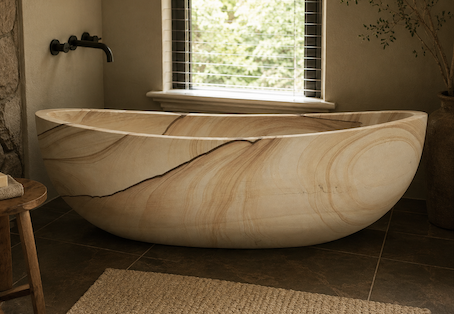
3. Soft Oval Taj Mahal Marble Bathtub
A soft oval Taj Mahal marble bathtub is defined by elongated proportions and gently curved ends that create a relaxed, elegant silhouette. Without sharp corners or decorative detailing, attention naturally shifts toward the stone itself. Warm greige and creamy beige tones flow around the curved body, while cloudy taupe movement gives the simple form greater depth.
This shape works beautifully in both classical and contemporary bathrooms, making it a versatile option if you want something elegant without being tied to a particular style.
4. Oval Taj Mahal Marble Bathtub
The oval Taj Mahal marble bathtub is one of the most enduring freestanding shapes. Its continuous curves soften the visual weight of natural stone and allow the pattern to travel smoothly around the entire body. In lighter Taj Mahal varieties, warm cream and beige coloring with delicate taupe markings creates a particularly calm and understated appearance.
This is a reliable choice if you want a luxurious stone bathtub with long term design appeal rather than a highly stylized form.


5. Rectangular Taj Mahal Marble Bathtub
A rectangular Taj Mahal marble bathtub creates a strong architectural focal point through straight sides, defined corners, and broad uninterrupted stone surfaces. Because the form has very little decorative detailing, the natural pattern becomes the main feature. Warm greige and beige tones combined with cloudy taupe movement can give the simple geometry considerable visual depth.
This shape is particularly suited to minimalist and contemporary bathrooms where clean lines are an important part of the architecture.
6. Tapered Rectangular Taj Mahal Marble Bathtub
The tapered rectangular bathtub softens traditional rectangular geometry through gently sloping sides, rounded corners, and a narrower base. These details make the form appear lighter while preserving the clean architectural character that makes rectangular tubs so versatile. Taj Mahal stone adds warmth through cream, sandy beige, and subtle taupe movement across the simple exterior.
This is an excellent option for warm minimalist, contemporary, and spa-inspired bathrooms where you want clean geometry without the heaviness of a solid block tub.


7. Flared Rim Taj Mahal Marble Bathtub
A flared rim gives this Taj Mahal marble bathtub a more expressive silhouette without relying on elaborate ornament. The sides gradually widen toward the top, while the projecting rim emphasizes the graceful curved profile. Creamy beige and soft greige Taj Mahal stone works especially well with this shape because its cloudy taupe movement follows the changing curves naturally.
Consider this design if you want something more distinctive than a standard oval while still keeping the overall look refined. It pairs beautifully with timber, bronze, plaster, and other warm finishes.
8. Straight-Sided Rectangular Taj Mahal Marble Bathtub
The straight-sided rectangular bathtub is all about clean geometry and the visual strength of natural stone. Its box-shaped profile creates large uninterrupted surfaces where Taj Mahal marble or quartzite can become the dominant feature. Deeper beige and taupe varieties are particularly striking here, as fine ivory veins and cloudy brown movement stand out clearly against the simple form.
This design suits modern bathrooms where the bathtub is intended to feel architectural rather than decorative.


9. Sculpted Oval Taj Mahal Marble Bathtub
The sculpted oval takes the familiarity of a classic oval tub and introduces more defined shaping through faceted sides, a tapered lower body, and carefully formed transitions. These subtle changes make the bathtub feel bespoke while retaining the comfortable proportions associated with an oval design. Taj Mahal stone enhances the sculptural effect as its beige and taupe movement changes appearance across the different planes.
This is a strong choice if you like the timelessness of an oval but want a more individual architectural character.
10. Ribbed Taj Mahal Marble Bathtub
Vertical ribbing transforms a relatively simple freestanding bathtub into a highly tactile stone feature. The repeated grooves create alternating highlights and shadows across the surface, adding depth while still allowing the warm greige, creamy beige, and taupe character of Taj Mahal stone to remain visible. Softly rounded corners prevent the ribbed exterior from feeling too rigid.
This design works particularly well in contemporary bathrooms where texture is used instead of elaborate ornament.


11. Floral Carved Taj Mahal Marble Bathtub
A floral carved Taj Mahal marble bathtub introduces traditional stone craftsmanship through carefully worked botanical detailing. Keeping the carving concentrated on selected areas allows the decorative work to become a focal point while leaving enough plain stone visible to appreciate its natural cream, beige, and taupe movement.
This design is particularly suited to homeowners who want something more artistic and handcrafted than a minimalist stone tub.
12. Vertical Fluted Taj Mahal Marble Bathtub
Vertical fluting gives this Taj Mahal marble bathtub a refined architectural texture while preserving a clean overall silhouette. The narrow repeated grooves emphasize the height of the body and create subtle shadows across the warm ivory and creamy beige surface. Natural taupe movement remains visible between the flutes, preventing the carved texture from overpowering the stone.
This style fits especially well in contemporary and transitional bathrooms where tactile surfaces are part of the design language.


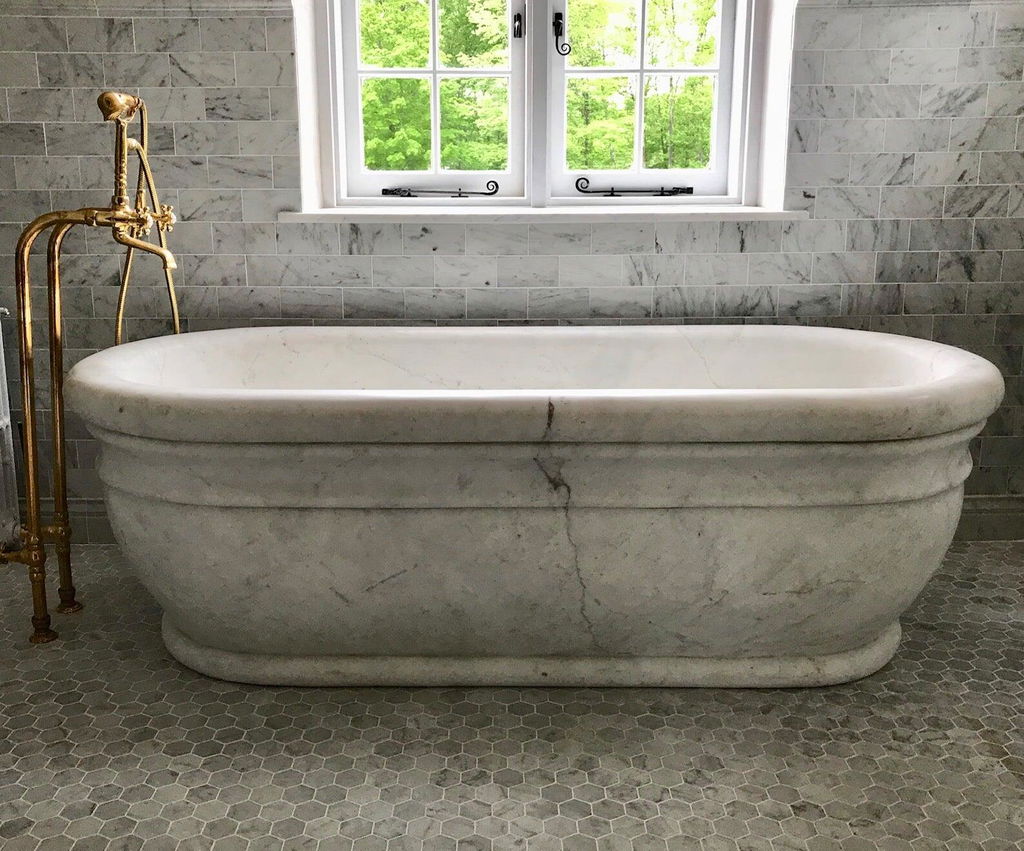
13. Classical Medallion Taj Mahal Marble Bathtub
This classical Taj Mahal marble bathtub combines an oval body with a raised rim, molded base, and carved medallion details. Together, these elements give the tub a more formal character, while the warm beige and creamy taupe coloring of the stone keeps the ornamentation visually soft. Natural cloudy movement also prevents the carved surfaces from appearing too uniform.
It is particularly well suited to traditional bathrooms with arched windows, panel molding, brass fittings, and classical architectural details.
14. Floral Carved Raised Rim Taj Mahal Marble Bathtub
A raised rim gives this oval bathtub a substantial classical profile, while the floral carving introduces a distinctly handcrafted focal point. Taj Mahal stone provides an elegant background for the detailing, with warm beige, creamy taupe, and cloudy natural movement surrounding the carved flowers rather than competing with them.
This is an appealing option when you want decorative craftsmanship but still prefer the familiarity and comfort of an oval bathtub.


15. Stepped Rim Taj Mahal Marble Bathtub
The stepped rim introduces subtle architectural layering to an otherwise simple Taj Mahal marble bathtub. Rather than using carved motifs, the design relies on clean horizontal transitions around the upper edge to give the form greater definition. Soft rounded corners balance the detailing, while creamy beige, warm ivory, and cloudy taupe movements bring natural depth to the broad stone surfaces.
This is a versatile choice for transitional bathrooms where completely minimalist forms may feel too plain, but elaborate carving would be unnecessary.
16. Rolled Rim Oval Taj Mahal Marble Bathtub
The pronounced rolled rim gives this oval Taj Mahal marble bathtub a graceful traditional character. Its sweeping upper edge draws attention to the craftsmanship of the stone, while the stepped base gives the tub a stronger visual foundation. Creamy beige coloring with soft taupe and cloudy brown movement complements the curved profile particularly well.
This style feels at home in elegant traditional and transitional bathrooms, especially alongside warm wood, brass fixtures, and understated architectural detailing.


17. Deep Oval Taj Mahal Marble Bathtub
A deep oval Taj Mahal marble bathtub combines generous bathing depth with a simple sculptural form. The taller curved body creates an enveloping appearance while providing a broad surface for the stone's natural pattern to be appreciated. Warm beige and taupe coloring with lighter veins can become particularly striking as the pattern travels around the continuous curves.
This is a beautiful option for a spa-inspired primary bathroom where comfort and visual presence are equally important.
18. Low Profile Oval Taj Mahal Marble Bathtub
The low-profile oval creates a more relaxed interpretation of the traditional freestanding stone bathtub. Its elongated body and reduced height emphasize horizontal proportions, giving the design a calm and understated presence. Soft cream and warm beige Taj Mahal stone suits this silhouette particularly well, especially when gentle taupe movement follows the length of the tub.
This design is ideal for contemporary and spa-inspired bathrooms where quiet luxury is preferred over decorative detailing.


19. Contemporary Tapered Taj Mahal Marble Bathtub
The contemporary tapered bathtub uses a wider upper profile and narrower base to create a lighter, more sculptural silhouette. Its curved and angled surfaces offer a modern alternative to conventional oval and rectangular tubs without becoming excessively complicated. Taj Mahal stone enhances the shape through creamy ivory, warm beige, caramel, and taupe movements that flow naturally across the changing surfaces.
This is a strong choice for a contemporary bathroom where the bathtub needs to stand out through form rather than ornament.
20. Wide Oval Taj Mahal Marble Bathtub
A wide oval bathtub is a beautiful choice for larger bathrooms where comfort and visual presence are equally important. Its broad proportions and gently curved sides create a generous bathing area while keeping the overall form soft and balanced. Taj Mahal marble works especially well with this shape because its warm ivory, creamy beige, and subtle taupe movement flow naturally across the large curved surface.
This design is ideal if you want the bathtub to become the centerpiece of the bathroom without relying on elaborate carving or decorative details. The simple silhouette allows the natural character of the stone to provide the luxury.


Final Thoughts
If you are planning a statement bathtub for a new luxury bathroom or considering a complete renovation, use these designs as inspiration rather than a fixed formula.
The Taj Mahal look can take on very different personalities depending on the bathtub form. It can appear softly sculptural in an oval design, bold and architectural in a rectangular tub, relaxed and contemporary with rounded edges, expressive through artistic detailing, or deeply cocooning in a soaking form.
What connects these very different designs is the warm, restrained character associated with Taj Mahal stone. Its ivory, cream, beige, champagne, and taupe tones can sit comfortably within contemporary, minimalist, Japandi, transitional, classical, and highly luxurious interiors.
From a design perspective, that makes the Taj Mahal palette a reassuring starting point for a statement bathtub. It provides enough natural character to make the tub special without forcing the entire bathroom to revolve around a highly dramatic color or pattern.
Choose the form that suits your architecture and the bathing experience you want to create. Then consider the exact stone, fabrication possibilities, lighting, surrounding finishes, and amount of space the bathtub needs to be appreciated properly.
Done well, a Taj Mahal bathtub becomes more than a bathroom fixture. It becomes the hero of the room and the element around which the entire bathroom can be designed.
The Marblebee Perspective
At Marblebee, we believe an exceptional natural stone bathtub starts with choosing the right material for both the design and the intended application. Explore our natural stone options, take inspiration from these Taj Mahal bathtub designs, and work with our stone specialists to find the material and custom form that best suits your bathroom.