10 Must-Have Marble Installations for Timeless Classical Interiors

As a grand home décor element, marble expresses opulence through structure, not extravagance. It is not a passing trend; it is a material with architectural authority. For centuries, it has shaped estates, civic buildings, and distinguished residences where proportion, balance, and timelessness matter more than surface ornament.
Marble immediately signals intention. Its natural weight creates hierarchy within a room. Its surface (whether softly honed or highly polished) controls how light interacts with space. More than decoration, marble becomes part of the architecture itself, bringing clarity, stability, and lasting material authenticity to classical interiors.
In this article, we examine 10 must-have marble installations that define an iconic classical home. It is an analytical guide for architects, interior designers, builders, and discerning homeowners who understand that marble is not applied; it is specified with architectural intent.
Marble as Architectural Language
Marble communicates authority before furniture is placed and before art is hung. It establishes architectural permanence. It clarifies structural emphasis. It reinforces compositional rhythm.
Historically validated across continents and eras, marble remains relevant because it is adaptable within strict proportional systems. It can be carved into disciplined moldings or left as monolithic planes. It can frame thresholds, anchor fireplaces, or define circulation through flooring patterns.
Historically validated across continents and eras, marble remains relevant because it is adaptable within strict proportional systems. It can be carved into disciplined moldings or left as monolithic planes. It can frame thresholds, anchor fireplaces, or define circulation through flooring patterns.
Its material integrity allows for both structural gravitas and sculptural refinement. The variety of finishes, like polished, honed, brushed, fluted, and hand-carved, ensures that the same stone can perform differently depending on context. Marble does not compete with architecture; when thoughtfully specified, it becomes an integral part of it.
Why Architects and Designers Specify Marble
Designers don’t choose marble for decoration; they specify it to define hierarchy within a space. In classical composition, hierarchy determines how a room is read: what commands attention, what supports it, and how transitions unfold. Marble clarifies this structure. Its weight, depth, and surface presence immediately distinguish primary architectural elements from secondary ones.
Architects prefer marble for its structural gravitas. It reinforces load-bearing symbolism and enhances architectural permanence in both interior and exterior applications. Interior designers rely on it for sculptural detailing, like mantels, columns, staircases, and surrounds, that require precision and material authority.
Builders appreciate this natural stone for its longevity and performance across generations. Luxury homeowners recognise its generational design value and its measurable contribution to enduring resale strength. Marble is not a short-cycle material; it is an investment in continuity.
Marble provides material authenticity. It holds crisp edges without visual compromise. It supports carving depth while maintaining structural integrity. Over decades, it retains compositional relevance rather than appearing dated or temporary.
Proper fabrication, accurate templating, controlled carving, and precise alignment are essential. Installation tolerances must be exact. These requirements mirror the discipline of classical architecture itself, where proportion and precision determine success.
10 Must-Have Marble Installations in Classical Homes


1. Marble Fireplace: A Must-Have Centerpiece in Classical Interiors
Why It’s Essential in Classical Design
In a classical home, the fireplace is not decorative. It is foundational. It establishes the main visual axis of the room and anchors furniture placement, ceiling detailing, and wall symmetry. Without a strong focal point, even beautifully furnished spaces can feel scattered. A marble fireplace brings order.
In traditional architecture, every grand room benefits from a central anchor. The fireplace fulfills that role with authority. It introduces weight, permanence, and architectural clarity. When proportioned correctly, it becomes the compositional heart of the space, guiding how the room is read.
If you want your classical interior to feel intentional rather than styled, a marble fireplace is a must-have.


How to Select the Right Marble
Begin with tone and mood. Light marbles in warm white or soft cream enhance elegance and reflect natural light, making formal living rooms feel airy yet grand. Deeper marbles in grey, beige, or muted brown introduce richness and depth, especially in larger or high-ceilinged spaces.
Veining direction influences perception. Vertical veining emphasizes height. Horizontal veining broadens the wall. Subtle veining creates timeless sophistication, while bold patterns add drama.
Finish selection matters. Polished marble increases reflectivity and formality. Honed finishes soften the look and feel more understated.
Always choose marble with proper heat tolerance and ensure professional sealing to maintain long-term durability.
Proportion & Installation Tips
Mantel thickness should visually relate to ceiling cornice depth. The surround height should align with door heads or panel divisions in the room. Oversized mantels can overpower modest spaces, while undersized ones lose impact.
Projection depth is crucial. A well-projected mantel creates shadow lines that add architectural dimension. Precise fabrication and clean edge detailing are essential for classical refinement.
How It Elevates Your Home’s Value & Style
A marble fireplace immediately enhances perceived luxury. It signals craftsmanship and permanence. It increases resale appeal because buyers recognize it as a long-term architectural investment.
More importantly, it defines the emotional center of the room. It becomes the gathering point, the visual anchor, and the element that ties the entire composition together.
In classical interiors, the fireplace is not optional. In marble, it becomes unforgettable.


2. Marble Console Table: A Must-Have for a Refined Classical Entrance
Why It’s Essential in Classical Design
In a classical home, first impressions are architectural. The entry foyer or corridor sets the tone for everything that follows. A marble console table is a foundational element because it introduces structure, symmetry, and material weight at the very beginning of the spatial journey.
Without a defined anchor, entry walls can feel empty or transitional. A marble console transforms that wall into a composed design statement. It signals intention. It creates balance. It establishes a refined rhythm before guests even step into the main living areas.
In classical interiors, transitional spaces deserve as much discipline as primary rooms. The console ensures that no area feels visually neglected.


How to Select the Right Marble
Start with tone and scale. In smaller foyers, lighter marbles with subtle veining maintain openness and brightness. In grander halls, stronger veining or warmer tones can add character without overwhelming the space.
Thickness matters. A console top should feel substantial. Thin slabs can look fragile and disconnected from classical architecture. A well-proportioned top creates visual stability.
Edge detailing should complement your overall style. Soft eased edges feel refined. Carved profiles introduce ornament. Choose based on the formality level of your home.
Always ensure proper sealing, especially in entry areas exposed to dust and moisture.
Design & Placement Tips
Alignment is everything. The console should be centered precisely beneath a mirror, artwork, or wall panel division. Classical design relies on symmetry. Even slight misalignment disrupts balance.
Consider leg design carefully. Fluted legs enhance traditional elegance. A solid monolithic base introduces architectural boldness. The base must visually support the stone’s weight.
Height should allow comfortable placement of decorative objects without crowding the wall above.
How It Elevates Your Home’s Value & Style
A marble console table adds architectural depth to circulation spaces. It strengthens continuity between rooms by repeating the material language used elsewhere, such as fireplaces or flooring.
More importantly, it transforms a transitional zone into a deliberate design moment. It enhances perceived luxury from the moment someone enters.
In a truly classical home, every space is composed. A marble console ensures that even the smallest architectural pause feels intentional and elevated.


3. Marble Staircase: A Must-Have Architectural Investment
Why It Defines the Entire Home
In a classical residence, the staircase is never secondary. It is often the first architectural gesture guests encounter, and it sets expectations for everything that follows. If your home includes multiple levels, a marble staircase is a defining installation for creating vertical grandeur and visual continuity.
A well-designed staircase does more than connect floors. It anchors the foyer, enhances ceiling height perception, and creates sculptural movement. Without a strong stair presence, large entry spaces can feel incomplete.
Selecting Marble for Structure and Elegance
When choosing marble, slab continuity should be your first priority. Veining must flow naturally across treads and landings. Disjointed slab placement weakens the visual impact and disrupts classical harmony.
For safety and longevity, consider a honed or lightly textured finish. While polished marble looks dramatic, stairs require thoughtful slip resistance, especially in family homes.
Color selection should relate to surrounding materials. Ideally, the staircase marble should complement flooring and fireplaces rather than compete with them.


Engineering and Proportion Tips
Stair width should feel generous relative to foyer scale. Nosing details must be refined and consistent. Avoid overly decorative edges that distract from the overall composition.
Professional installation is essential. Structural anchoring, precise templating, and exact alignment ensure long-term stability.
Long-Term Value and Impact
A marble staircase immediately elevates perceived luxury. It signals craftsmanship and architectural seriousness. It becomes a defining design feature that adds lasting value and timeless presence to the home.


4. Marble Door Surrounds: A Must-Have for Architectural Depth
Why Transitions Matter in Classical Design
In classical interiors, transitions are deliberate. Doorways are not simply openings; they are framed passages. Marble door surrounds are a foundational element if you want your home to feel layered, composed, and architecturally complete.
Plain painted trim flattens walls. Marble introduces depth, shadow, and permanence. It creates visual rhythm as you move from room to room.


Choosing the Right Marble for Continuity
Because door surrounds repeat throughout the home, consistency is key. Select a marble tone that complements your major installations such as flooring or fireplace mantels.
Subtle veining works best for repeated elements. Strong, dramatic patterns may overwhelm smaller openings.
Finish selection should align with the home’s mood. Honed finishes feel refined and understated. Polished finishes suit more formal classical interiors.
Installation and Alignment Advice
The thickness of the surround must relate to wall depth. Too thin looks applied. Too heavy looks forced.
Precise alignment is critical. The top of the surround should align with cornices or panel heads. Horizontal consistency strengthens classical balance.
Professional fabrication ensures crisp moldings and clean edges that will remain sharp over time.
Why It Adds Real Value
Marble door surrounds quietly elevate craftsmanship perception. They transform everyday movement into an architectural experience. Over time, they enhance resale value because they signal custom detailing and material investment.
In classical homes, refinement is found in the details. Door surrounds deliver that refinement consistently.


5. Marble Columns: A Must-Have for Spatial Order and Grandeur
Why Columns Anchor Classical Architecture
Columns create rhythm. They divide space without closing it. In expansive living areas, verandas, or double-height halls, marble columns are essential for establishing proportion and structure.
Without columns, large areas can feel undefined. With them, the space gains hierarchy and architectural clarity.


Selecting Marble and Detailing Thoughtfully
Choose marble that harmonizes with your interior palette. Light marbles emphasize elegance, while warmer tones introduce gravitas.
If fluting is included, ensure expert carving. Poor detailing weakens impact instantly. Capitals and bases must be precisely proportioned to avoid appearing heavy or awkward.
For exterior columns, prioritize proper sealing and structural anchoring to withstand weather exposure.
Proportion and Placement Guidelines
The diameter-to-height ratio determines elegance. Overly thin columns feel fragile. Oversized columns dominate unnecessarily.
Spacing between columns should be mathematically consistent. Classical rhythm depends on repetition and balance.
Architectural and Financial Value
Marble columns immediately elevate perceived luxury. They create framed views and structured pathways. They communicate permanence and architectural seriousness.
For homeowners seeking estate-level sophistication, marble columns are not decorative additions. They are foundational elements of classical design.


6. Marble Railings: A Must-Have for Refined Continuity
Why Railings Complete the Staircase
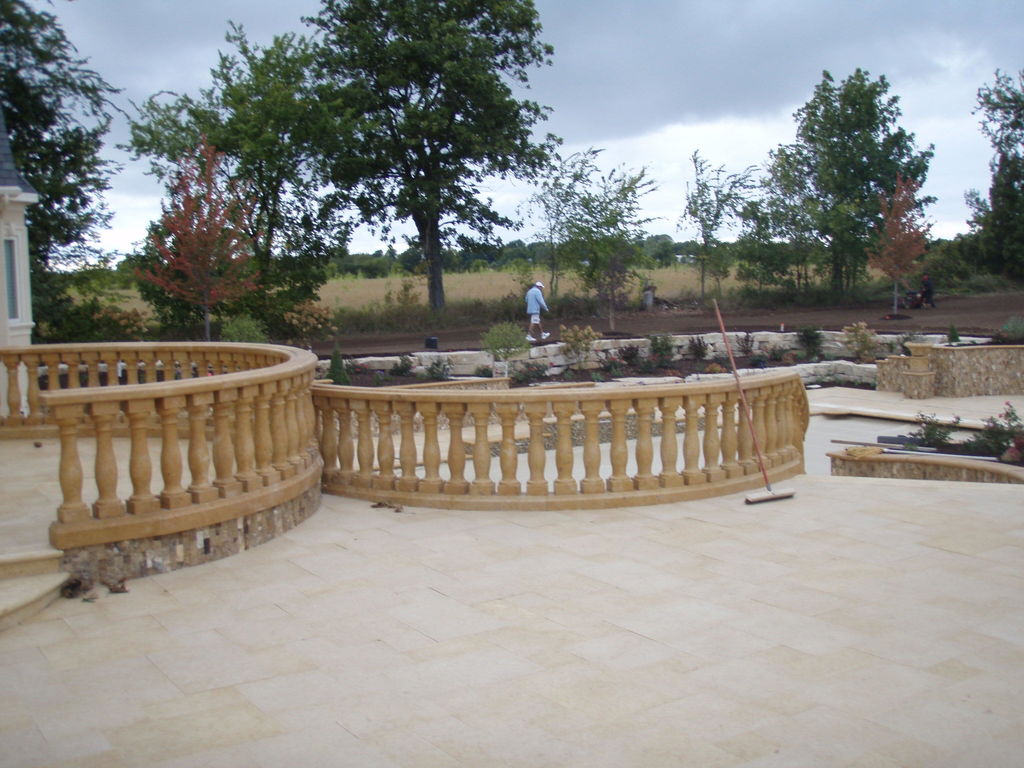
In classical homes, repetition creates elegance. Railings run across staircases, balconies, and upper corridors, meaning they influence visual harmony more than most homeowners realize. Marble railings or marble baluster bases are a architectural necessity if you want your staircase to feel architecturally complete rather than purely functional.
When railings lack weight, staircases can feel unfinished. Marble introduces grounded structure and balances lighter materials like brass or wrought iron.


Selecting Marble and Complementary Materials
Choose marble that relates to your staircase treads. It does not need to be identical, but it should belong to the same tonal family. Strong contrast can work, but it must feel deliberate.
For fully marble balusters, ensure high-quality carving. Each piece must be consistent in profile and proportion. For mixed-material designs, marble plinth bases combined with metal handrails offer a refined transition between materials.
Finish selection should complement the staircase surface. Honed marble is often preferable for hand-level elements to reduce glare.
Precision and Installation Essentials
Spacing between balusters must be exact and consistent. Alignment with stair nosing is critical. Even slight inconsistencies disrupt classical rhythm.
Height and handrail grip must meet safety standards without sacrificing proportion.
Why They Add Lasting Value
Marble railings elevate everyday functionality into sculptural repetition. They reinforce craftsmanship and increase perceived quality throughout the home. In classical design, consistency creates sophistication, and railings are central to that continuity.


7. Marble Statue: A Must-Have for Artistic Identity
Why Classical Homes Need a Focal Sculpture
A classical interior benefits from narrative moments. A marble statue provides personality without disrupting architectural order. It is a compositional anchor for homeowners who want their space to feel curated rather than merely furnished.
Placed thoughtfully, a statue anchors perspective. It can terminate a corridor, enrich a foyer, or enhance a garden axis.


Choosing the Right Marble and Form
Select marble that enhances sculptural detail. Lighter stones often highlight carving depth beautifully. Strongly veined marble can work, but should not distract from the form itself.
The statue’s style should align with your home’s architectural language. Classical figurative pieces complement traditional homes. Simplified sculptural forms suit modern-classical spaces.
Scale matters. A statue should command attention without overwhelming the room.
Placement and Lighting Strategy
Always position sculptures intentionally. Align them with visual axes or within niches to reinforce symmetry.
Use soft directional lighting to enhance depth and create subtle shadow play.
Long-Term Impact
A marble statue adds artistic richness while maintaining timeless elegance. It elevates a home from well-designed to memorable, increasing both emotional and aesthetic value.


8. Marble Garden Bench: A Must-Have for Structured Outdoor Elegance
Why Outdoor Spaces Deserve Architectural Attention
In classical landscaping, gardens are composed just like interiors. A marble garden bench is a must-have if you want your outdoor areas to feel structured rather than informal.
It introduces permanence into natural surroundings and provides a resting point within geometric layouts.


Selecting Marble for Exterior Performance
Choose dense, weather-resistant marble suitable for outdoor use. Lighter tones reflect sunlight and maintain a fresh appearance over time.
Ensure proper sealing and maintenance planning. While marble ages gracefully, protection enhances longevity.
Foundation and Placement Advice
Stability is crucial. The bench must sit on a properly prepared foundation to prevent shifting. Align it with pathways or garden axes to maintain visual order.
Ergonomics matter. Seat height and depth should allow comfortable use.
Added Value
A marble bench elevates the garden from decorative to architectural. It enhances estate character and strengthens landscape symmetry, increasing overall property appeal.


9. Marble Gazebo: A Must-Have for Estate-Level Presence
Why It Transforms a Landscape
A marble gazebo defines a destination within the garden. It is a structural investment for homeowners seeking grand outdoor architectural presence.
A marble gazebo defines a destination within the garden. It is a structural investment for homeowners seeking grand outdoor architectural presence.
It creates structure, frames gatherings, and anchors symmetry.


Selecting Marble for Structural Beauty
Choose marble capable of withstanding outdoor exposure. Uniform tone works well for larger structures to avoid visual chaos.
Columns, domes, and carved ceilings require expert fabrication. Precision is non-negotiable.
Planning and Structural Considerations
Site placement must align with primary garden axes or focal viewpoints. Random positioning weakens impact.
Foundation engineering is essential. Substructure support ensures long-term stability.
Why It Adds Lasting Prestige
A marble gazebo enhances estate value dramatically. It signals investment, craftsmanship, and permanence. Properly planned, it becomes the defining feature of the landscape.


10. Marble Fountain: A Must-Have Architectural Centerpiece for Classical Estates
Why Water Defines Classical Composition
In classical design, water is structured, not ornamental. A marble fountain is vital for homeowners who want their outdoor spaces to carry the same compositional authority as their interiors.
In formal gardens, courtyards, or estate forecourts, a fountain establishes hierarchy. It becomes the visual and spatial anchor around which pathways, plantings, and architectural elements are arranged. Without a defined focal point, expansive landscapes can feel scattered or incomplete. A marble fountain introduces order, symmetry, and permanence.
Just as a fireplace anchors a living room, a fountain anchors the exterior axis. It defines destination and reinforces architectural intention.
Selecting the Right Marble and Form
Material selection must prioritize both aesthetic harmony and long-term durability. Dense, weather-resistant marble is essential for exterior exposure. Proper sealing and drainage planning protect structural integrity over time.
Tone should complement the surrounding architecture. Light marble enhances sculptural detailing and reflects natural light beautifully. Warmer tones introduce classical gravitas and blend seamlessly with heritage-style facades.
Form must align with the architectural language of the property. Tiered fountains reinforce traditional symmetry. Column-centered or domed designs echo estate-level grandeur. Simpler basin fountains suit restrained classical layouts.
Excess ornamentation should be avoided unless proportionally justified. In classical architecture, restraint preserves elegance.


Proportion, Engineering & Installation Considerations
Scale is critical. A fountain that is too small loses authority. One that is oversized disrupts circulation and visual balance. Basin diameter, tier height, and pedestal proportions must relate to pathway widths and building scale.
Foundation engineering is non-negotiable. Substructure support must accommodate significant stone weight and integrated plumbing systems. Proper water flow calibration prevents excessive splash and preserves surrounding surfaces.
Professional fabrication ensures carving precision and clean edge detailing. Poor alignment or uneven tier installation immediately weakens compositional clarity.
Placement Strategy and Long-Term Value
A marble fountain performs best when positioned along a primary visual axis or at the geometric center of a formal garden. Random placement diminishes impact. Classical landscapes rely on symmetry and calculated perspective.
Thoughtful lighting enhances depth and creates subtle shadow play across carved surfaces.
A marble fountain elevates a landscape from decorative to architecturally composed. It communicates permanence, craftsmanship, and estate-level seriousness. More importantly, it transforms outdoor space into an experiential environment where sound, movement, and stone interact with intention.
In classical homes, architecture extends beyond the walls. A marble fountain ensures that the exterior carries the same measured authority as the interior.
Marble Installations as Grand Architectural Décor
In classical residences, marble installations function as opulent architectural statements. Their scale, weight, and material depth elevate interiors beyond furnishing into composition. A carved fireplace, a fluted column, or a patterned marble floor does more than occupy space; it establishes presence.
Marble’s opulence lies in its authenticity. The veining is natural, the mass is real, and the craftsmanship is evident in every edge and contour. When specified thoughtfully, these installations become defining features of a home, carefully measured, monumental, and architecturally composed rather than ornamentally applied.
Closing Perspective: Marble as Compositional Authority
Classical homes are not decorated; they are composed. Marble remains the material through which that composition is articulated with striking visual appeal and structural clarity. For designers and homeowners, specifying marble is a long-term architectural decision. It requires disciplined proportion, restraint in detailing, and a commitment to material authenticity. In classical design, excess is never the defining factor; precision and balance are.
At Marblebee, marble is approached not as a product, but as a collaborative architectural element. We maintain our own curated collection while offering customisation in sizes, profiles, finishes, and detailing to meet specific design intentions. Our wide range of natural stones, including diverse marble selections, supports projects that demand compositional balance, technical accuracy, and material integrity.
At Marblebee, marble is approached not as a product, but as a collaborative architectural element. We maintain our own curated collection while offering customisation in sizes, profiles, finishes, and detailing to meet specific design intentions. Our wide range of natural stones, including diverse marble selections, supports projects that demand compositional balance, technical accuracy, and material integrity.
From fireplace mantels and grand staircases to columns and bespoke flooring layouts, our craftsmanship translates architectural vision into stone with measured execution. Fabrication, delivery, and design support are aligned with the professional standards expected by architects and interior specialists. Marble endures because it is deliberate, carrying architectural memory forward into contemporary classical homes with quiet authority.