8 Types of Architectural Stone Finial Designs for Classical Buildings

Understanding Architectural Finials
In classical architecture, even the smallest details contribute to the harmony of the overall design. One such element is the architectural finial; a decorative ornament placed at the highest point of a structure. Serving as a finishing accent, finials bring a sense of completion and refinement to architectural elements.
Stone finials are typically crafted from materials such as marble, limestone, sandstone, or cast stone, which allow for intricate carving while offering durability in outdoor environments. Their sculptural form adds subtle elegance and visual emphasis to the structure.
They are commonly installed on gate pillars, roof peaks, balustrade posts, staircase newel posts, garden walls, and pavilion roofs. By marking the uppermost point of these features, finials guide the eye upward and create a balanced, polished architectural composition.


Where Stone Finials Are Commonly Used in Classical Buildings
Stone finials are used in several architectural locations where vertical elements naturally conclude. Their placement not only adds decorative interest but also reinforces the structure’s visual hierarchy.
Entrance Gate Pillars:
One of the most common applications is on entrance gate pillars. Luxury villas, estates, and classical residences often place finials on top of gate columns to create a formal and distinguished entrance. These sculptural elements help frame the entryway and enhance the sense of arrival.
Balustrade Posts:
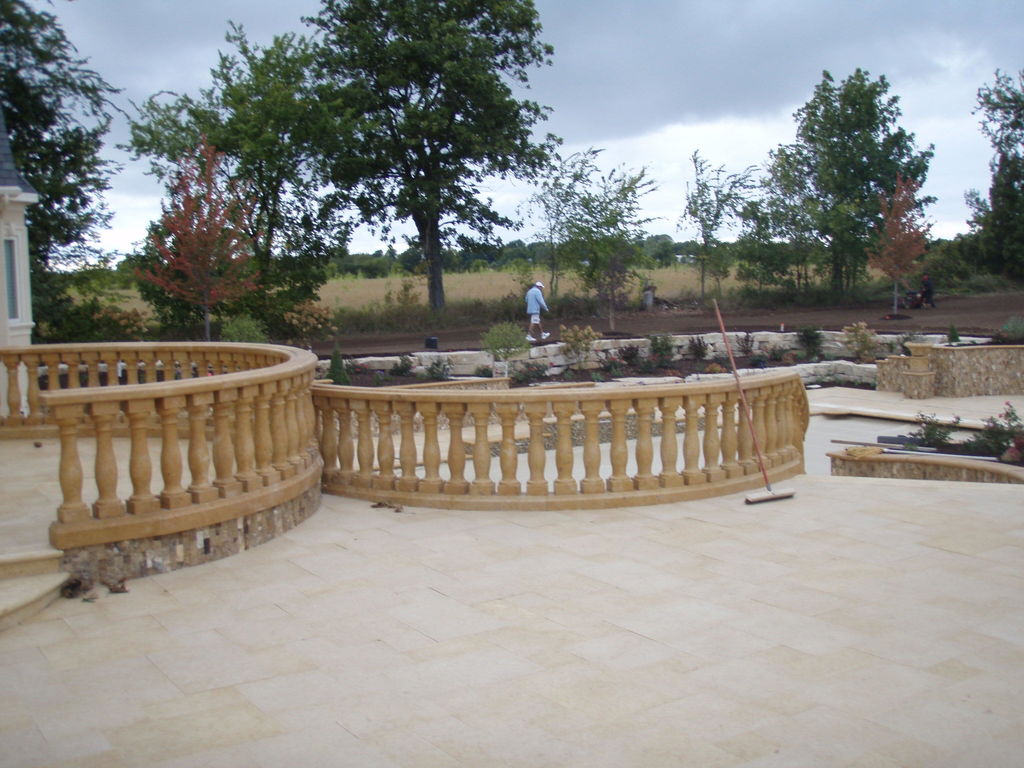
Finials are also frequently used on balustrade posts, particularly on terminal or corner posts of terrace railings and balconies. In these settings, they complete the rhythm of balusters while giving the railing a polished architectural finish.
Roof Peaks and Pediments:
Another important location is roof peaks and pediments. Placing a finial at the highest point of a roof ridge or pediment draws attention upward and highlights the building’s central axis.
Garden Architecture:
Beyond the main structure, finials are widely used in garden architecture, including garden walls, pergolas, fountains, and pavilion roofs. In landscaped spaces, these decorative elements introduce sculptural detail that complements both architecture and nature.


Important Factors When Choosing Stone Finial Designs
Selecting the right finial design involves more than choosing an attractive shape. Architects carefully consider several design principles to ensure the finial complements the building’s architecture.
Architectural style compatibility: It is one of the most important factors. Different classical styles traditionally favor certain finial designs. For example, neoclassical buildings often feature urn or flame finials, while French classical architecture may incorporate fleur-de-lis motifs. English estate architecture frequently uses pineapple finials, which historically symbolize hospitality and welcome.
Scale and proportion: These are equally essential. The finial must be visually balanced with the column, pillar, or structure beneath it. Smaller pillars typically work best with simple designs, while large estate entrances or monumental columns can support more detailed or sculptural finials. If the finial appears too large or too small, it can disrupt the architectural harmony.
Material selection: This factor also plays a significant role. Stone finials are commonly carved from marble, limestone, sandstone, or granite. Among these materials, marble is particularly valued for its ability to hold fine details, its refined appearance, and its durability in outdoor environments.
When these factors are carefully considered, finials can seamlessly enhance the architectural language of a building.


Finial Design Categories in Classical Architecture
While finials appear in many different decorative forms, architects often understand them through broader design categories. These categories help determine how a finial visually interacts with the surrounding architecture and how strongly it expresses symbolism or ornamentation.
Geometric Finials
Geometric finials rely on simple mathematical forms such as spheres, pyramids, or cones. Because of their clean and balanced proportions, these designs are highly versatile and work well in both traditional and modern classical settings. Ball or sphere finials are among the most common examples, providing a restrained and elegant architectural finish.
Natural Motif Finials
Some finials draw inspiration from forms found in nature. Designs such as acorns, floral patterns, or lotus shapes introduce organic detail into architectural compositions. These motifs soften the rigid geometry of stone structures while adding sculptural richness. Natural motif finials are especially common in garden architecture, estate entrances, and terrace balustrades.
Symbolic Finials
Many finial designs carry historical or cultural symbolism. Elements such as the fleur-de-lis or pineapple finial are not only decorative but also communicate meaning. The fleur-de-lis has long been associated with European royal heritage, while the pineapple historically symbolized hospitality and welcome. Because of their symbolic value, these finials are often used on prominent architectural features such as entrance gates and ceremonial structures.
Understanding these categories helps architects and designers select finials that align with the visual language of a building while reinforcing its architectural identity.


Types of Architectural Stone Finial Designs
The following finial designs represent some of the most widely used forms in classical and estate architecture.


Urn Finials
Urn finials are among the most recognizable forms used in classical architecture. Inspired by ancient Greek and Roman ceremonial urns, these designs typically feature a rounded body, a narrow neck, and a decorative lid or top element.
Their balanced proportions and sculptural form make them especially suitable for neoclassical buildings, where symmetry and elegance are central design principles. Urn finials are commonly placed on entrance gate pillars, terrace balustrades, and garden walls, where they contribute to a refined architectural composition.
Beyond their decorative appeal, urn finials also carry historical significance. In classical art and architecture, urns were often associated with tradition, heritage, and artistic refinement.
Visually, these finials introduce a graceful silhouette that softens the vertical lines of columns and pillars. Their rounded form contrasts beautifully with linear architectural elements, creating a harmonious and timeless aesthetic.


Ball (Sphere) Finials
Ball finials, also known as sphere finials, are one of the simplest and most versatile finial designs. They consist of a perfectly carved stone sphere mounted on a small pedestal or base.
Because of their clean geometric form, ball finials work well in both traditional architecture and modern classical designs. Their simplicity allows them to complement a wide variety of architectural styles without overpowering surrounding elements.
These finials are commonly used on fence pillars, staircase newel posts, terrace railings, and garden walls. Their symmetrical shape creates a sense of visual balance while maintaining a subtle decorative presence.
The sphere itself has long been associated with ideas of unity, completeness, and harmony. When placed atop a pillar or column, it provides a clear and elegant architectural conclusion.
Ball finials are particularly valued for their understated sophistication, offering a refined finish without excessive ornamentation.


Flame (Torch) Finials
Flame finials are carved to resemble a stylized flame or torch rising upward. Their dynamic form introduces a sense of movement and energy into architectural compositions.
Historically, the flame has symbolized knowledge, illumination, power, and enlightenment. Because of this symbolism, flame finials are often used in monumental or palace-style architecture where strong visual statements are desired.
They are commonly placed on grand entrance pillars, building corners, and pediment tops, where their vertical design helps draw attention to the highest points of a structure.
From a visual perspective, flame finials create a dramatic architectural accent. The carved curves and upward movement contrast with the solid geometry of stone columns, giving the building a more expressive and sculptural character.
When carefully proportioned, these finials can transform an ordinary architectural element into a striking focal point.


Pineapple Finials
Pineapple finials have a unique place in architectural history due to their symbolic meaning. For centuries, the pineapple has represented hospitality, warmth, and welcome, particularly in European and colonial estate architecture.
This symbolism made pineapple finials a popular decorative element for estate entrances and grand residential gateways. Placing them on driveway pillars, garden walls, and gate columns subtly communicates a welcoming gesture to visitors.
The design itself typically features a rounded base with a textured surface resembling the pineapple’s distinctive pattern, often topped with stylized leaves.
Beyond symbolism, pineapple finials add rich decorative character to architectural settings. Their detailed carving and distinctive shape create visual interest while maintaining a classical aesthetic.
Today, they remain a favored choice for traditional homes and estate landscapes that aim to combine architectural elegance with historical meaning.


Acorn Finials
Acorn finials draw inspiration from nature, specifically from the fruit of the oak tree. Their form usually features a smooth rounded base topped with a textured cap, closely resembling a natural acorn.
In many cultures, acorns symbolize strength, growth, resilience, and long-term prosperity. Because the mighty oak tree grows from a small acorn, the design has long represented potential and endurance.
Acorn finials are frequently used in traditional European estate architecture, where natural motifs are often incorporated into decorative elements. They are commonly placed on balustrade posts, garden walls, staircases, and terrace railings.
Visually, acorn finials introduce a subtle organic element into architectural design. Their natural inspiration creates a gentle contrast with the structured geometry of classical buildings.
When carved in stone, these finials provide a timeless decorative accent that blends architectural elegance with symbolic meaning.


Fleur-de-Lis Finials
The fleur-de-lis is a stylized lily motif that has been historically associated with French royalty and aristocratic heritage. Because of its regal symbolism, it became a widely recognized decorative element in classical European architecture.
Fleur-de-lis finials are particularly common in French classical and Baroque architectural styles, where ornamental details are used to convey grandeur and historical prestige.
These finials are often installed on palace gates, decorative fences, and entrance pillars, where their intricate shape adds a refined and ornamental character.
The design typically features three petal-like forms that rise upward from a central base, creating a balanced and symmetrical silhouette.
Visually, fleur-de-lis finials introduce a strong sense of heritage and elegance. Their detailed carving transforms them into small sculptural artworks that enrich the architectural composition.


Spire Finials
Spire finials are tall, pointed ornaments designed to emphasize vertical height. Their slender profile naturally guides the eye upward, reinforcing the sense of elevation in architectural structures.
These finials are most commonly associated with Gothic architecture, where verticality is a defining characteristic. They can often be seen on cathedral towers, roof ridges, pinnacles, and decorative turrets.
The primary purpose of spire finials is to accentuate the upward movement of a building’s design. By extending the visual line of a column or tower, they create a more dramatic and expressive skyline.
Even when used on smaller architectural features such as garden pavilions or entrance pillars, spire finials introduce a strong sense of elegance and architectural rhythm.
Their clean, tapering shape allows them to stand out while still maintaining harmony with the surrounding structure.


Floral or Lotus Finials
Floral finials are carved with decorative botanical motifs inspired by flowers, petals, or natural plant forms. These designs reflect the long-standing connection between architecture and ornamental sculpture.
Across many cultures, floral motifs symbolize beauty, purity, renewal, and harmony with nature. One of the most recognizable forms is the lotus-inspired finial, which is frequently used in temple architecture and ornamental garden structures.
Floral finials are commonly placed on garden walls, fountains, balustrade posts, and pavilion roofs, where they enhance the decorative character of outdoor spaces.
The carved petals create intricate textures that catch light and shadow beautifully, adding depth to the stone surface.
By incorporating natural forms into architectural elements, floral finials soften rigid structural lines and bring an artistic, sculptural quality to classical design.


How Finials Enhance Classical Architecture
Although finials are relatively small architectural elements, they play a meaningful role in shaping the overall composition of a building. Architects often use them to introduce symmetry, visual hierarchy, and decorative completion.
By marking the uppermost point of pillars, railings, or rooflines, finials act as visual punctuation points within a design. They signal where an architectural element ends while drawing the eye upward.
For instance, when two matching finials are placed on entrance gate pillars, they help frame the gateway and create a balanced, formal entry experience. Similarly, finials along a terrace balustrade can establish rhythm and continuity across the facade.
Because of their sculptural nature, finials also provide an opportunity to introduce symbolic motifs or artistic craftsmanship. When thoughtfully selected, they elevate architectural details and contribute to the building’s overall sense of refinement.


Conclusion
Although finials may seem like minor decorative elements, they play an important role in classical architectural design. Positioned at the highest points of structures, they help create a sense of balance, elegance, and visual completion within the overall composition.
Placed on entrance pillars, balustrades, rooflines, or garden walls, the right finial can subtly enhance the architectural character of a building. From simple geometric forms to more decorative motifs, each design adds a refined finishing touch.
At Marblebee, we see finials as more than decorative accents.They are more like the final design accents that bring an architectural vision to life.We treat each piece as a sculptural detail that helps complete the overall design story. Alongside our work in architectural stone, we offer a diverse selection of natural stones that can be shaped into the finial designs mentioned above or into any form envisioned by a designer or homeowner.
Variations in stone type, size, and finish allow each piece to suit its architectural context. Through careful craftsmanship, these details are carved to crown structures with balance, elegance, and a sense of completion. That’s how we help designers and homeowners translate their architectural vision into finely carved stone details.