Designing with White Onyx: Beauty, Limits, Costs, and Where It Truly Belongs

The Allure and Responsibility of White Onyx
White onyx occupies a rare and elevated position in interior design. It is not chosen for durability, endurance, or everyday practicality. But often selected for its aesthetic quality. It beautifully captures light, softens architectural lines, and transforms surfaces into moments of visual emotion rather than functional elements.
At MarbleBee, white onyx is one of the most requested yet most misunderstood stones we work with. Designers are drawn to it when a space needs a moment of pause: something luminous, emotive, and unmistakably luxurious. Homeowners are often captivated by its glow, discovering it through backlit walls, sculptural washbasins, bespoke bathtubs, or dramatic focal panels that feel more like art than stone.
But this beauty comes with responsibility. White onyx is not a forgiving material. It demands understanding, restraint, and precision in both design and execution. When used thoughtfully, it elevates interiors into the realm of experiential luxury. If not, it becomes a costly mistake.
This guide brings clarity to white onyx, explaining its true nature, its material behaviour, and the environments where it performs best. Because when handled with expertise and intent, white onyx does more than enhance an interior. It shapes its identity!


What Is White Onyx, Really? (And Why It’s Not True Marble)
Although commonly sold as white onyx marble, white onyx is not a type of marble in the geological sense. White onyx is a form of calcite onyx; a calcium carbonate stone formed through chemical precipitation rather than the high-pressure metamorphic processes that create true marble. It develops in mineral-rich water environments, such as caves, springs, or underground channels, where calcium carbonate slowly deposits in layers over time.
So why is it not a true marble?
In the stone trade, many polishable calcite stones are grouped and sold as marble because they are cut, finished, and installed using similar techniques. But from a design and performance perspective, this difference is critical. White onyx behaves very differently from marble in terms of softness, porosity, translucency, and durability.
At MarbleBee, we make this distinction clear to clients and designers from the outset. Understanding the nature of the material is the foundation of successful specification.
The Visual Language of White Onyx
What truly sets white onyx apart is not veining alone, but also the way it interacts with light.
Key visual characteristics
-
A milky white to soft ivory base
-
Subtle linear, cloud-like, or flowing banding
-
Gentle honey, beige, pale gold, or warm grey undertones
- A semi-translucent to highly translucent structure
When polished, white onyx forms a surface that feels almost glass-like, smooth, and refined. When backlit, it reveals depth and movement that no traditional marble can replicate. The stone does not merely reflect light; it absorbs and diffuses it.
Every slab of white onyx is exquisite. Banding density, translucency levels, and tonal variation differ dramatically from block to block. This is why slab selection at MarbleBee is treated as a deliberate design decision, not a procurement formality.


Where White Onyx Comes From and Why That Drives Cost
White onyx is found in limited geographic regions, and this rarity directly affects its price and availability.
Major quarry regions
- Iran (the most consistent and widely respected source)
- Turkey
- Afghanistan
- Pakistan
- Mexico
- Select premium extractions in Italy
Large, flawless blocks are extremely rare. White onyx fractures easily during extraction, leading to high wastage at the quarry level. Only a fraction of extracted material is suitable for large slabs, and an even smaller percentage qualifies for premium backlit applications.
This interplay of scarcity, fragility, and demand explains why white onyx is one of the most expensive natural stones and why pricing varies significantly from slab to slab.
Material Properties Designers Must Understand
White onyx is more of a decorative stone, not performance-driven, as it’s not very durable. Understanding its physical and behavioral properties is essential before specifying it in any interior application.
Core Material Characteristics
White onyx is a calcite-based stone composed primarily of calcium carbonate and is often mislabelled as marble in the stone trade. It has a Mohs hardness of around 3, making it significantly softer than most marbles, with moderate to high porosity that requires professional sealing. Due to these properties, white onyx is suitable only for low-impact, low-contact environments. Its high translucency defines its distinctive visual appeal, while also naturally limiting where and how it should be used in interior applications.
Surface Behavior & Sensitivities
- Scratches more easily than marble and granite
- Susceptible to etching from acidic substances (lemon, vinegar, wine, cosmetics)
- Reacts poorly to harsh or abrasive cleaning agents
- Sensitive to heat and sudden temperature changes
Structural & Functional Limitations
- Not suitable for structural or load-bearing applications
- Should not be used in high-traffic or impact-prone areas
- Requires resin backing and reinforcement for slab stability
- Demands controlled installation conditions to prevent cracking
Practical Design Implications
- Requires regular sealing to prevent staining
- Best specified as an accent or feature material, not a primary surface
- Performs best in climate-controlled interiors
- Needs informed client expectations regarding care and longevity
Where White Onyx Truly Belongs in Interior Design
White onyx performs best in spaces where aesthetic impact takes priority over physical stress. Its value lies in visual drama, translucency, and emotional appeal, making correct placement essential.
Bathrooms


White onyx is exceptionally well-suited for bathrooms, where it transforms functional spaces into spa-like sanctuaries. Used on vanity backsplashes, feature walls, shower niches, or accent panels, it introduces softness and warmth that traditional stones cannot replicate. Its light-diffusing quality enhances calmness and creates a sense of luxury, particularly in powder rooms and master baths where usage is controlled and exposure to heavy wear is limited.
Styling tip: Pair white onyx with warm ambient lighting, minimal fixtures, and brushed brass or champagne-finish hardware to enhance its glow.
Kitchen Countertops


In kitchens, white onyx should be treated as a decorative surface rather than a primary worktop. It works best on island counters, breakfast ledges, or serving zones that experience light use. While visually striking, its softness and sensitivity make it unsuitable for heavy cooking, frequent heat exposure, or aggressive cleaning.
Styling tip:Combine white onyx islands with durable quartz or granite perimeter counters to balance luxury with practicality. Use it as a blacksplash for aesthetic purpose.
Bathtubs


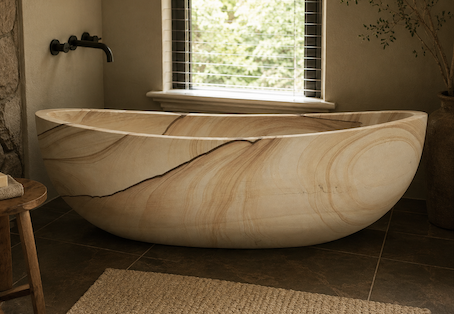
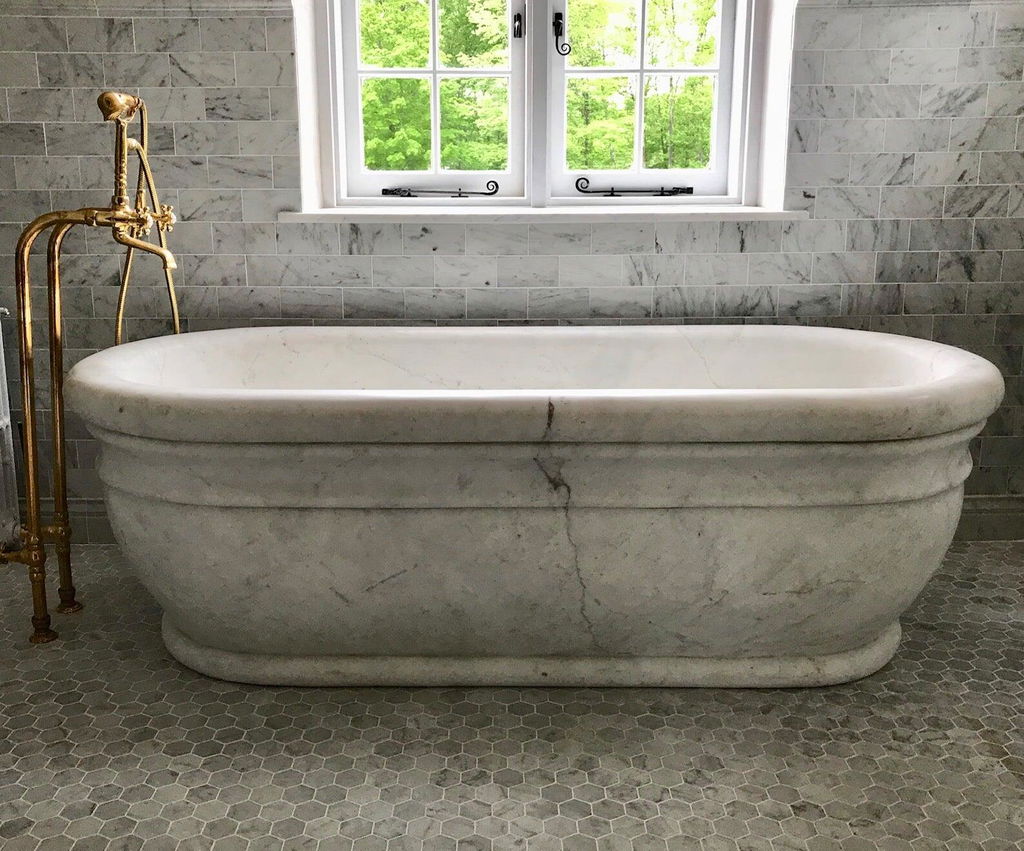
A white onyx bathtub is a statement of pure indulgence. Sculpted from solid stone or clad in slabs, it becomes the visual and emotional centerpiece of the bathroom. When paired with soft, warm lighting, the stone’s translucency creates an immersive bathing experience that feels more like a wellness ritual than a functional routine.
Styling tip: Position the bathtub in a low-clutter zone with indirect lighting and neutral surroundings to allow the form and material to stand out.
Pedestal Sinks & Vanities


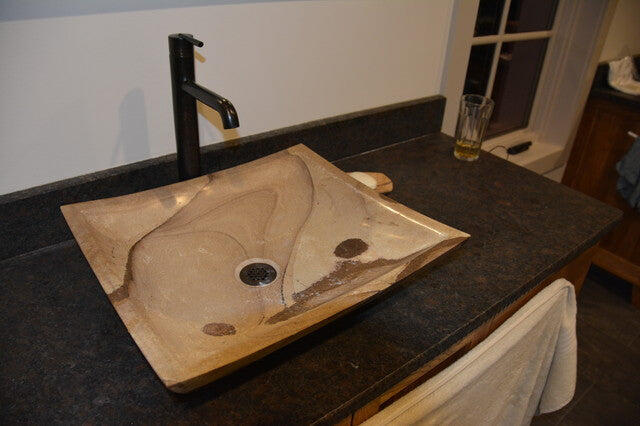
White onyx pedestal sinks and vanities represent one of the most refined uses of the stone. These applications showcase craftsmanship and material beauty while remaining relatively protected from heavy wear. As sculptural elements, they elevate bathrooms and powder rooms into design-led spaces without compromising functionality when properly sealed and maintained.
Styling tip: Keep surrounding finishes understated: soft neutrals, textured walls, or warm wood tones help the onyx remain the focal point.
Fireplace Surrounds


As a fireplace surround, white onyx delivers visual drama without heaviness. Its natural translucency, especially when backlit, allows the fireplace to remain a focal feature even when not in use. Unlike darker stones, white onyx brightens the space and adds a layer of architectural sophistication.
Styling tip: Use large-format slabs with minimal joints or book-matched layouts for a seamless, high-end finish.
Table Tops


White onyx table tops are best reserved for side tables, console tables, or formal dining settings with controlled use. In these applications, the stone functions as a decorative surface rather than a utilitarian one, offering elegance and visual depth without constant exposure to wear.
Styling tip: Pair white onyx tops with sculptural metal or solid wood bases to create balance and visual contrast.
Living Rooms


In living rooms, white onyx works beautifully as a feature wall, TV backdrop, or decorative panel. It introduces depth, warmth, and a sense of refinement, particularly in formal living spaces or lounges designed for entertaining rather than everyday activity.
Styling tip: Incorporate concealed backlighting and limit competing textures to maintain visual clarity and impact.
Bars & Decorative Panels


Low-traffic bar counters, back bars, and decorative wall panels are ideal for white onyx, especially in luxury residences and hospitality interiors. The stone adds glamour, depth, and ambiance. These qualities align perfectly with social and experiential spaces.
Styling tip: Backlighting is essential here; pair white onyx with dark woods, smoked glass, or brass accents for dramatic contrast.
Flooring


White onyx flooring is most appropriate in carefully managed spaces where elegance and visual presence take precedence over everyday wear. Due to its softness and porosity, it is unsuitable for everyday circulation areas or homes with heavy footfall. In private foyers, formal lounges, or boutique hospitality settings, it creates an immediate sense of luxury and luminosity, especially when paired with selective backlighting or perimeter lighting.
Styling tip: Limit white onyx flooring to framed zones or inlay panels rather than full-floor coverage. Pair it with harder materials like marble, wood, or metal trims to protect edges and reduce wear.
Staircases


White onyx staircases function primarily as visual centrepieces rather than everyday structural elements. When used for stair risers, side cladding, or feature panels alongside staircases, the stone delivers dramatic visual impact without being exposed to constant impact or abrasion. Full onyx treads are rarely recommended except in sculptural, low-use staircases within luxury residences or galleries.
Styling tip: Use white onyx on risers or side panels with integrated lighting to create a floating effect. Combine with stone, wood, or metal treads to maintain safety and longevity.
Interior Design Styles That Complement White Onyx
White onyx does not suit every design language. It thrives in styles that allow it to breathe.
Luxury Contemporary
Clean lines, open layouts, and restrained palettes allow white onyx’s translucency to become the focal point. In minimal environments, the stone adds warmth and depth without visual clutter.
Art Deco
Art Deco embraces white onyx for its natural glamour. Paired with brass accents, symmetry, and layered lighting, the stone enhances drama and reflects the style’s historic elegance.
Neo-Classical
In neo-classical interiors, white onyx is best used sparingly as a statement element. Feature panels or fireplace surrounds introduce luminosity while respecting classical balance and proportion.
Hospitality Interiors
Hotels, spas, lounges, and luxury suites use white onyx to create luxury experiences. Backlit installations help define brand identity and elevate atmosphere in controlled, low-impact zones.
Middle Eastern & Mediterranean Luxury
Warm lighting, arches, and textured finishes amplify white onyx’s richness. In these interiors, the stone complements opulence while maintaining softness and visual warmth.
The Role of Backlighting: Turning Stone into Atmosphere
Backlighting means placing soft lights behind white onyx so the stone gently glows from within. Because white onyx is naturally translucent, light can pass through it and highlight its natural patterns, layers, and veins. Without backlighting, white onyx still looks elegant. With backlighting, it looks richer, warmer, and more luxurious. That is why designers often recommend it; but it is optional, not compulsory.
Design essentials
- Slab thickness: 15–20 mm for optimal diffusion
- High-CRI LED panels to maintain colour integrity
- Warm light temperature (3000K–3500K)
- Proper diffusers to eliminate hotspots
- Ventilation gaps to prevent heat buildup
Cost Breakdown: What White Onyx Really Costs
Material pricing (approximate)
- Commercial grade: USD 40–80 per sq ft
- Premium translucent grade: USD 100–200 per sq ft
- Rare backlit / book-matched slabs: USD 200–250+ per sq ft
Additional costs
- Fragile cutting and slow fabrication
- Resin backing and mesh reinforcement
- Professional sealing
- Custom lighting systems
- Skilled installation
Installed luxury projects
Backlit white onyx feature walls can reach USD 2,500–5,000 per m², making it 3–8 times more expensive than standard marble when fully executed.
Maintenance, Care & Longevity
White onyx requires maintenance and care for longevity.
Do
- Seal regularly
- Clean with pH-neutral products
- Use soft cloths only
Avoid
- Acidic cleaners
- Abrasive pads
- Direct heat or impact
With proper care, white onyx can last decades, but it will never be maintenance-free.
Is White Onyx Worth It? An Honest Designer’s Perspective
Worth it when
- Used as a focal statement
- Backlit architectural feature
- Luxury branding or hospitality spaces
Not worth it when
- Budget is limited
- High-wear performance is required
- Practicality outweighs experience
White onyx is about emotion and luxury, not daily wear and tear.


Design Moments Where Onyx Takes Center Stage
- Backlit hotel lobby wall
- Luxury powder room feature panel
- Art Deco bar backdrop with brass detailing
- Jewellery showroom statement wall
- Fireplace surround in a modern villa
- Spa reception desk glowing softly at night
- Boutique retail interior accent wall
- Neo-classical living room focal panel
- Private home bar counter
- Signature wall in a luxury residence
FAQs: White Onyx in Interior Design
1. Is white onyx marble?
No. From a geological standpoint, white onyx is a calcite-based stone, not true marble. It is often grouped with marbles in the trade because of similar finishing techniques and luxury positioning. Designers should treat it differently during detailing, fabrication, and usage due to its higher translucency and fragility.
2. Can white onyx be used in kitchens?
Experts generally advise against using white onyx in heavy-use kitchens. It is sensitive to heat, acids, and staining agents commonly found in cooking areas. If specified at all, it should be limited to decorative backsplash panels or low-contact bar fronts, never countertops or cooking zones.
3. Does white onyx stain easily?
Yes. White onyx is highly porous and can stain quickly if left unsealed or exposed to acidic liquids like lemon juice, wine, or cleaners. Professional-grade sealing and strict maintenance routines are essential, especially in residential projects where daily control is harder to enforce.
4. Is backlighting mandatory?
Backlighting is not mandatory, but from a design perspective, it is what transforms white onyx from stone into experience. Without light, much of its translucency and depth is lost. Designers often recommend backlighting for feature walls, reception desks, or focal panels where visual impact is key.
5. How thick should white onyx slabs be?
For backlit applications, experts recommend 15–20 mm thickness. This allows light to diffuse evenly without compromising structural stability. Thinner slabs risk cracking, while thicker slabs reduce translucency and increase costs unnecessarily.
6. How long does white onyx last?
With correct installation, sealing, and maintenance, white onyx can last for decades. Its lifespan depends less on age and more on how well it is protected from impact, moisture, and chemicals, making professional specification critical.
7. Why is white onyx so expensive?
The cost reflects natural rarity, high wastage during quarrying, fragile fabrication, and luxury demand. Large, defect-free slabs are uncommon, and installation requires skilled handling, all of which add to its premium pricing.
8. Can it be repaired if damaged?
Minor chips and surface scratches can often be professionally repaired and polished. However, major cracks or structural breaks are difficult to fix invisibly. This is why white onyx should never be treated as a high-traffic material.
9. Are there cheaper alternatives?
Yes. Backlit quartz and porcelain slabs offer similar glowing visual effects with significantly higher durability and lower maintenance. Many designers specify these alternatives when clients want the onyx look without the associated risks and costs.
Final Takeaway: Beauty with Intention
White onyx is valuable not because it outperforms other materials, but because it creates a distinct emotional experience. While quartz and porcelain deliver consistency and durability, they cannot replicate the organic depth, natural variation, and luminous quality of real onyx. It is not an all-purpose surface, but an intentional architectural choice—best used with precision, where light, material, and form come together to make a lasting visual statement. When specified with restraint and understanding, white onyx elevates interiors beyond decoration into meaningful design moments.
At MarbleBee, we collaborate closely with designers, architects, and discerning homeowners to ensure white onyx is used with technical clarity and design confidence. From meticulous slab curation and specialised fabrication to integrated backlighting and bespoke creations (like pedestal sinks, vanities, bathtubs, and signature feature installations), every application is engineered to honour both the beauty and the inherent limitations of this exceptional stone.
At MarbleBee, we collaborate closely with designers, architects, and discerning homeowners to ensure white onyx is used with technical clarity and design confidence. From meticulous slab curation and specialised fabrication to integrated backlighting and bespoke creations (like pedestal sinks, vanities, bathtubs, and signature feature installations), every application is engineered to honour both the beauty and the inherent limitations of this exceptional stone.