Sodalite Blue Marble Explained: Origin, Characteristics, and Design Applications

In the world of refined interiors, few materials command attention quite like Sodalite Blue Marble. It is not merely a surface; it is a visual experience. Defined by its deep, saturated blue tones and striking white mineral veining, this stone immediately distinguishes itself from the more familiar spectrum of whites, greys, and beiges that dominate architectural palettes.
What makes this material particularly compelling is its rarity. Blue natural stone is exceptionally uncommon, and that alone elevates sodalite-based slabs into the realm of collectible design materials. Designers often turn to it when a space calls for a bold focal point: something sculptural, expressive, and unmistakably luxurious. From statement furniture to monolithic bathroom elements, it performs as both material and art.
Beyond its visual drama lies a fascinating mineral composition that gives the stone its character and depth. This article explores that foundation, tracing its geological origins, defining features, architectural applications, and the nuanced considerations that guide its use in sophisticated spaces.
This exquisite natural stone draws attention, yet rewards restraint; revealing its full character only when thoughtfully placed. In the right setting, it does not just elevate a space; it defines it.


Why Blue Stone is Rare in Nature
In geological terms, blue is an anomaly. Most natural stones derive their coloration from minerals that produce earthy tones, such as iron oxides, which create reds and browns. Calcite lends whites and creams, while carbon elements introduce greys and blacks. These are abundant, predictable, and widely distributed across the Earth’s crust.
True blue formation requires a far more specific set of conditions. Minerals such as sodalite, azurite, and lapis-associated compounds are rare, as they form only under particular chemical and environmental circumstances. Their presence in large, extractable formations is even rarer, which is why naturally blue architectural stone is seldom encountered.
Sodalite is the defining mineral here. Its intense royal blue coloration is not superficial; it is intrinsic to the stone’s crystalline structure. When this mineral occurs in sufficient concentration within a rock formation, it produces the vivid tones seen in Sodalite Blue Marble.
This rarity is precisely what enhances its desirability. In high-end design, scarcity often translates to value, not just monetary, but aesthetic. A material that is difficult to source carries a sense of exclusivity, making it a preferred choice for spaces that aim to feel distinctive rather than conventional.


Geological Formation and Mineral Composition
Sodalite-rich decorative stone is the result of a complex geological journey. This natural stone unfolds over millions of years beneath the earth’s surface. It begins in igneous environments, where molten magma cools slowly, allowing minerals to crystallize and settle into dense formations. Within this process, sodalite forms as part of a mineral-rich composition, embedding its distinctive blue character deep within the stone.
Over time, these formations may undergo metamorphic transformation. Subjected to intense heat and pressure, the stone’s internal structure evolves, refining its crystalline patterns and enhancing the interplay between its mineral components.
Mineral Composition and Visual Identity
At the heart of the stone lies sodalite, a feldspathoid mineral responsible for its unmistakable blue tone. Unlike surface coloration, this pigment is integral to the stone’s structure, giving it an enduring richness.
Complementing this base are other naturally occurring elements. White calcite veins cut through the blue mass, creating bold, organic contrast. In some slabs, delicate flecks of golden pyrite appear, adding a subtle metallic shimmer. Crystalline textures further enhance the surface, introducing layers of depth that shift with light.
Natural Variation
Because these mineral combinations form without uniformity, each slab emerges as a singular composition. No two pieces share the same veining or tonal balance, making every installation inherently unique.
Origin and Quarry Locations
This stunning natural material is most notably sourced from Brazil, a country long regarded as a global leader in exotic natural stone. Its geological diversity has produced some of the most visually compelling materials used in luxury architecture, and sodalite-rich formations are among its more distinctive offerings.
Extraction begins at carefully managed quarry sites, where large blocks of stone are removed from the earth using precision techniques designed to preserve their integrity. These raw blocks are then transported to processing facilities, where they are cut into slabs and gradually refined. Through polishing, the stone’s depth of color and intricate mineral patterns are fully revealed, transforming a rugged mass into a finished architectural surface.
Brazil’s role in the international stone market is significant. It supplies high-end materials to designers and architects across the world, making rare stones like sodalite accessible to global projects while maintaining their exclusivity.
What sets this material apart is the limited nature of its deposits. Sodalite-rich formations are not widespread, and only select quarries yield stone with the intensity and clarity required for design applications. This scarcity directly contributes to its premium positioning, ensuring that its use remains considered, intentional, and inherently luxurious.


Appearance, Color, and Pattern Characteristics
Visually, Sodalite Blue Marble appears somewhere between deep navy and vivid sapphire, depending on the concentration and distribution of sodalite within the slab. This variation in tone gives the material a layered quality, where certain areas appear darker and more grounded, while others seem illuminated from within.
Pattern and Natural Movement
What truly elevates the stone is its pattern language. Bold veins of white calcite move across the blue field, creating a striking contrast and a sense of natural rhythm. These veins are rarely linear; instead, they flow organically, often intersecting with softer, cloud-like mineral formations that diffuse the intensity of the base color. In certain pieces, subtle inclusions of golden pyrite emerge as small, reflective accents that introduce a refined metallic glint. These details, though understated, add another dimension to the overall composition, enriching its visual complexity.
Surface and Depth
When polished, the stone reveals its full character. The surface takes on a luminous quality, intensifying the blue tones and sharpening the clarity of its mineral patterns. Light interacts with the crystalline structure, enhancing depth and giving the stone its distinctly luxurious presence.
Surface Finishes
The final expression of Sodalite Blue Marble is shaped not only by its mineral composition but also by the way it is finished. Surface treatment plays a defining role in how the stone is perceived. altering its texture, reflectivity, and the way light reveals its depth.
Polished Finish
This is the most preferred finish for sodalite stone. A polished surface enhances the intensity of its blue tones, bringing out the richness of the color while sharply defining the white veining and mineral patterns. It introduces a reflective quality that adds brightness and a sense of refinement to the space.
Honed Finish
A honed surface offers a softer, more understated interpretation. With its matte to satin appearance, it diffuses light gently, allowing the stone’s character to come through without high gloss. This finish feels contemporary and quietly elegant.
Leathered or Textured Finish
For a more tactile experience, a lightly textured finish emphasizes the stone’s natural crystalline structure. It reduces reflectivity while adding depth and subtle movement.
Each finish transforms how the stone interacts with light, ultimately influencing the mood and visual balance of the interior.
Physical Properties and Durability
This exceptional marble offers more than visual drama. It carries the structural integrity expected of a high-quality natural stone. Its dense composition makes it well-suited for a range of interior architectural applications, particularly where durability and refinement must coexist. From wall cladding to custom furniture surfaces and sculptural installations, it performs reliably while maintaining its distinctive character.
Strength and Application Versatility
The stone’s density allows it to be fabricated into precise forms without compromising stability. This makes it a preferred choice for vertical surfaces and bespoke design elements where both strength and visual impact are essential.
Care and Longevity
Like most natural stones, it benefits from proper sealing to protect against staining and moisture. Routine maintenance with gentle cleaning methods helps preserve its finish and ensures that its color depth remains consistent over time.
Strategic Use in Design
Given its rarity and expressive appearance, sodalite is rarely used expansively. Instead, designers introduce it thoughtfully, highlighting feature areas where its presence can be fully appreciated without overwhelming the overall composition.
Ideal Architectural and Interior Applications
The strength of this rare marble lies in the presence that’s bold, expressive, and unapologetically refined. Designers introduce it with intent, placing it where its depth of color and natural movement can command attention without competition. It is less about coverage and more about impact. When thoughtfully integrated, it transforms everyday architectural elements into sculptural statements, shaping the mood of a space rather than merely complementing it.


Bathtubs
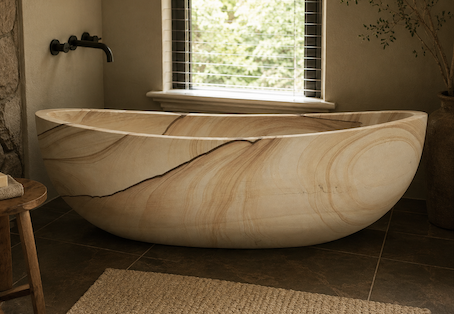
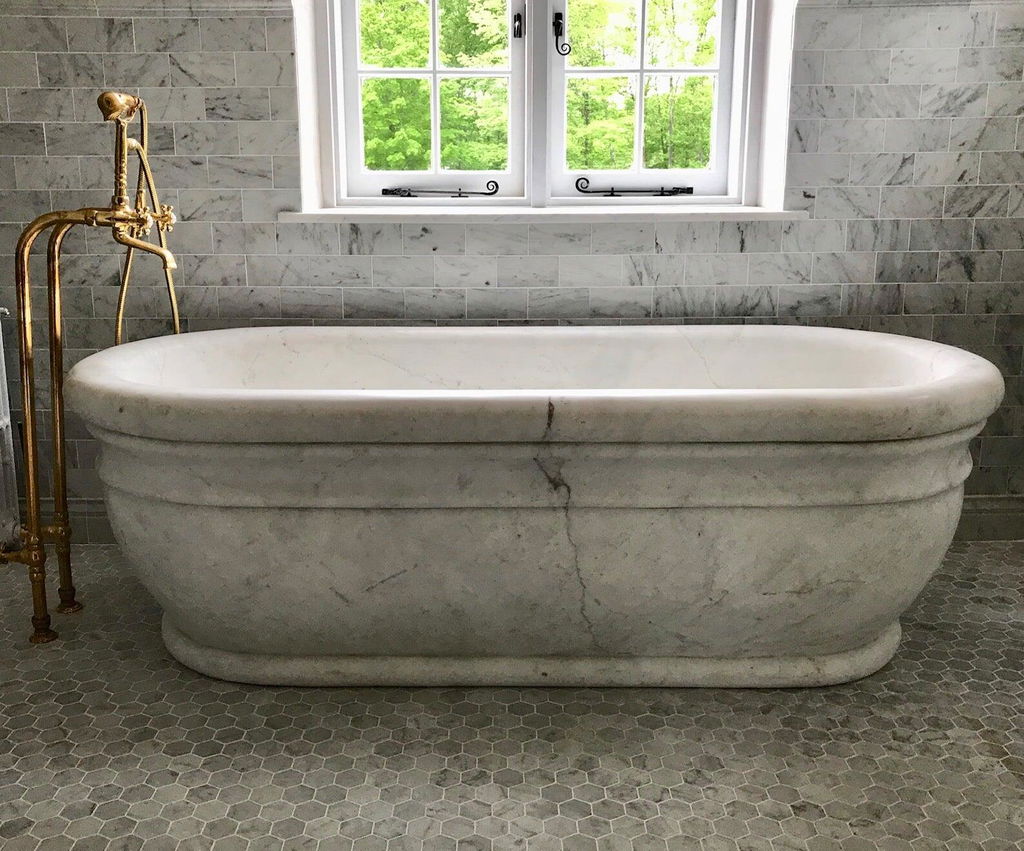
A bathtub carved from sodalite marble becomes an immersive focal point, almost monolithic in its presence. The striking blue tones and fluid veining evoke a sense of stillness, reminiscent of water translated into stone. Its visual weight anchors the room, creating a quiet sense of luxury that feels both grounded and indulgent. The form, often kept minimal and seamless, allows the material to speak without interruption, turning the bathing experience into something deeply atmospheric.
Style Tip/Inspiration: Pair with soft, diffused lighting, lime plaster or neutral stone walls, and brushed brass fixtures. A restrained palette of warm whites and sandy tones allows the bathtub to remain the emotional and visual centerpiece.


Washbasins and Pedestal Sinks
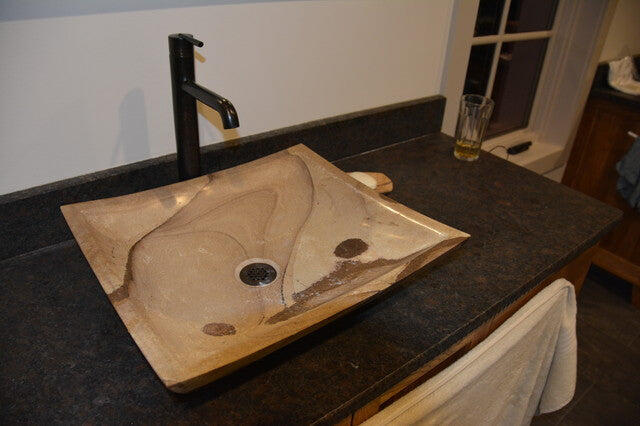
In smaller forms, sodalite becomes more intimate. Carved washbasins and pedestal sinks highlight the stone’s veining in a vertical expression, almost like a sculpted column. The proximity invites closer appreciation; every mineral detail becomes part of the daily ritual. Despite their scale, these elements hold a strong presence, often defining the character of powder rooms or compact bathrooms.
Style Tip/Inspiration: Place against textured backdrops such as fluted panels or micro cement walls. Wall-mounted faucets in aged gold or matte black enhance the contrast, while minimal accessories keep the composition clean and gallery-like.


Fireplaces
A sodalite-clad fireplace introduces depth and drama into living spaces. The cool intensity of the blue juxtaposed with the warmth of the fire creates a layered sensory experience. It naturally becomes the visual anchor, drawing people in while grounding the room’s composition. Whether modern or classic in form, the material elevates the fireplace into a statement feature that feels both bold and timeless.
Style Tip/Inspiration: Balance the richness with soft textures, like bouclé seating, wool rugs, and muted upholstery. Add warm wood accents and low ambient lighting to create an inviting yet architecturally composed environment.


Dining Tables
As a dining table, sodalite marble transforms functionality into artistry. The broad surface allows its patterns to unfold like a natural canvas, creating a centerpiece that defines the entire dining setting. It introduces a sense of occasion, where the material itself elevates the experience of gathering. The table becomes less about utility and more about presence, as it shapes the atmosphere of the room.
Style Tip/Inspiration: Pair with sculptural chairs in neutral tones or soft leather. Keep the surroundings understated, such as plaster walls, sheer drapery, and minimal decor, while a single pendant light above enhances the table’s visual gravity.


Flooring
On floors, sodalite is most effective when used sparingly. Rather than expansive coverage, it appears as a curated detail: an inlay, a border, or a defined entry moment. This selective application allows the material to stand out without overwhelming the space. It introduces rhythm and contrast, guiding movement while adding a layer of quiet luxury underfoot.
Style Tip/Inspiration: Combine with warm wood or soft-toned limestone flooring. Use sodalite to mark transitions (entry foyers or corridors) where it acts as a visual pause, enriching the spatial flow.


Feature Walls
Feature walls are where sodalite fully expresses its artistic potential. Bookmatched slabs create mirrored compositions that feel intentional and almost painterly. The symmetry and scale turn the wall into a natural artwork, commanding attention without the need for additional ornamentation. It sets the tone for the entire room, often becoming the defining element of the interior.
Style Tip/Inspiration: Enhance with concealed or directional lighting to reveal depth and veining. Surround with restrained materials (like matte finishes, soft fabrics, etc.), so the stone remains uninterrupted and visually dominant.


Kitchen Countertops
In the kitchen, sodalite works best as a statement surface, such as an island. Its bold color introduces contrast while maintaining a sense of refinement. It draws the eye immediately, anchoring the space and creating a focal point within an otherwise functional environment. The key lies in balance, allowing the stone to stand out without visual clutter.
Style Tip/Inspiration: Pair with matte cabinetry in muted tones such as taupe, grey, or off-white. Integrate warm metallic hardware and subtle lighting. Keep upper elements minimal so the countertop defines the kitchen’s visual identity.


Bathrooms
Used across bathroom surfaces, sodalite creates an enveloping, immersive atmosphere. Whether applied to vanity tops, walls, or shower features, it introduces continuity and depth. The interplay of blue tones with soft lighting creates a calming yet luxurious environment, transforming the bathroom into a private retreat.
Style Tip/Inspiration: Combine with natural textures, like wood accents, linen fabrics, etc., and warm lighting. Maintain simplicity in fixtures and layout, allowing the material to breathe and establish a tranquil, spa-like mood.


Staircases
Sodalite can elevate staircases beyond their functional role, turning them into architectural highlights. Applied on risers or vertical panels, it introduces movement and color across levels, enhancing the journey through the space. The contrast between horizontal treads and vertical blue accents creates a dynamic visual rhythm.
Style Tip/Inspiration: Pair with glass balustrades or slender metal railings to keep the structure light. Combine with dark wood or neutral stone treads to balance the intensity, allowing the blue to guide the eye upward with subtle drama.


Coffee Tables
As a coffee table, sodalite marble offers a refined yet approachable way to introduce bold material into living areas. Its smaller scale allows for experimentation without overwhelming the room. The natural patterns add character, making it both a functional piece and a conversation starter.
Style Tip/Inspiration: Style within a neutral setting, such as soft sofas, textured rugs, and layered textiles. Keep accessories minimal, perhaps a sculptural object or a single stack of books, so the stone’s natural composition remains the focal point in a relaxed yet sophisticated space.


Architectural Design Considerations
This natural stone has a distinct visual intensity that demands thoughtful placement. Its depth of color and expressive veining can easily dominate a space if not handled with restraint. Designers approach it with a sense of balance, allowing it to stand out while ensuring the overall composition remains cohesive and refined.
Balancing Strong Color
The stunning blue tones are best complemented by a neutral palette. Soft whites, warm beiges, and muted greys create a calm backdrop, allowing the stone to breathe visually without overwhelming the environment.
Using It as a Statement Feature
Rather than widespread application, sodalite is most effective when used in a single, defining element, like an island, a feature wall, or a sculptural object. This focused approach enhances its impact and preserves its exclusivity.
Careful Slab Selection
Each slab carries a distinct pattern. Selecting the right piece is a design decision in itself, ensuring that veining, movement, and color distribution align with the intended aesthetic.
Lighting Considerations
Lighting plays a critical role in revealing the stone’s depth. Soft, directional illumination enhances its crystalline structure and intensifies its tonal variation.
Pairing with Metals and Wood
Warm metals like brass or gold, along with rich woods such as walnut, create a layered contrast. These combinations soften the coolness of the blue while adding warmth and sophistication to the overall palette.


Design Aesthetics and Styling Combinations
In refined interiors, sodalite marble is rarely used in isolation. It is carefully composed with materials that enhance its character. Designers often pair it with brass and gold accents, which introduce warmth and highlight the richness of the blue tones. The subtle sheen of metal complements the stone’s natural depth without competing for attention.
Dark wood furniture, particularly walnut, adds grounding contrast. Its organic texture balances the polished surface of the stone, creating a layered and tactile environment. Neutral walls (like plaster, matte paint, or soft stone finishes) act as a quiet canvas, allowing the material to remain the focal point.
Glass and metallic elements introduce lightness, reflecting and amplifying the stone’s visual depth. Together, these combinations create interiors that feel curated and intentional, where sodalite becomes the centerpiece, as it’s bold yet harmoniously integrated into a sophisticated design narrative.
Maintenance and Care
The enduring beauty of Sodalite Blue Marble lies not only in its composition but in how it is cared for over time. Like all natural stones, it responds best to thoughtful maintenance that protects both its surface and its depth of color.
Surface Protection
Sealing is essential. It creates a protective barrier that helps resist moisture and staining, preserving the integrity of the stone without altering its natural appearance. Periodic resealing ensures long-term performance.
Gentle Cleaning Approach
Daily care should remain simple. A soft cloth with mild, non-abrasive cleaners is sufficient to maintain the surface. This approach prevents dullness while allowing the stone’s natural polish to remain intact.
Avoiding Harsh Chemicals
Acidic or aggressive cleaning agents can damage the finish and affect the clarity of the blue tones. Avoiding such products is key to preserving the stone’s visual richness.
With consistent care, the material retains its luminous quality, allowing its color and pattern to age gracefully within the space.


Cost and Market Value
Natural blue stone is exceptionally uncommon, and this scarcity directly influences its desirability in high-end design. Its value is driven not only by its striking appearance but also by the rarity of its mineral composition.
Several factors determine its market value. The quality of the slab plays a significant role, as stones with deeper, more striking blue tones and well-defined veining are often more sought after. The distribution and character of mineral patterns also affect pricing, as more visually balanced slabs are preferred for design applications. Thickness, along with the level of finishing and fabrication required, further contributes to the overall cost.
Because deposits of sodalite-rich stone are limited, availability remains selective. This exclusivity positions it within the luxury segment of the natural stone market, where it is chosen not for volume, but for impact and distinction.


Why It is Considered a Luxury Material
Sodalite Blue Marble holds a distinctive position in the world of natural stone, where rarity and visual identity define true luxury. In architecture and interior design, materials that move beyond conventional palettes are inherently more valued. Sodalite does precisely that, offering a depth and intensity that feels both dramatic and refined.
Rarity and Distinction
Natural blue stone is exceptionally uncommon. Unlike neutral-toned marbles that are widely available, sodalite-rich formations occur in limited geological conditions. This scarcity elevates the material, making it a considered choice rather than a standard specification.
Gemstone-Like Appeal
What sets sodalite apart is its resemblance to precious minerals. Its aesthetic blue base, contrasted with bold veining and occasional crystalline inclusions, gives it a jewel-like quality. It feels less like a surface and more like a curated element; something collected, not just installed.
Association with High-End Design
Because of its visual impact and limited availability, sodalite is often reserved for bespoke interiors. It is chosen for spaces that seek individuality, where materials are expected to make a statement while maintaining a sense of quiet sophistication.


Conclusion
Sodalite Blue Marble stands as one of the most exquisite expressions of natural stone, defined by its rare mineral composition, its intensely saturated blue tones, and the fluid, almost artistic veining that runs through each slab. It carries a presence that is both bold and refined, capable of transforming surfaces into sculptural statements. Its versatility allows it to move seamlessly across applications, while its rarity secures its place within the most elevated and design-led interiors.
At MarbleBee, we are expert design partners. We work closely with homeowners, designers, and architects to translate ideas into meaningful stone expressions, where every detail is considered. With our curated collection of natural stones, we offer the flexibility to explore materials, scales, and finishes that align effortlessly with the vision of each space.
We approach every piece with craftsmanship at the core, shaping stone into custom dimensions, refining finishes, and ensuring each creation feels intentional. From selection to fabrication and delivery, our process is designed to be seamless, allowing each project to reflect not just the beauty of the material, but the individuality of the design it becomes a part of.